
I. Introduction: Why Lasagna Never Goes Out of Style
I’ll be honest. The first time I saw lasagna, I wasn’t impressed.
It just sat there on the table like a heavy brick of food. Thick layers. Slightly messy edges. Cheese bubbling at the sides like it had a long day in the oven and was still recovering. No fancy plating. No elegance. Just a big tray of “here you go, deal with it.”
I remember thinking, this is it? This is the famous dish?
Then I took a bite.
Calculate Recipe Calories
And yeah… everything changed fast.
Soft pasta. Rich sauce. Cheese stretching like it had a mind of its own, refusing to let go. It wasn’t just good. It felt like something familiar, even though I didn’t grow up eating it often. Like I had somehow known it forever without actually meeting it.
That’s the strange thing about lasagna. It doesn’t try to impress you. It just waits for you to catch up.
A Small Story About a Very Real Comfort Food Moment
I still remember one evening when I made lasagna from scratch after a long, draining day. The kind of day where everything feels slightly louder than it should be, and even small tasks feel like climbing a hill with no end.
I didn’t feel like cooking. But I did it anyway.
I stood in my kitchen, not fully confident, stacking everything one layer at a time. Pasta sheet. Sauce. Cheese. Again. And again.
At some point, I even paused and thought, “This looks too simple. There’s no way this turns into something good.”
But I kept going.
While it baked, something shifted in the kitchen. The air changed. It got warmer, heavier, richer. That smell started filling every corner slow, deep, comforting. It didn’t rush. It just settled in like it belonged there.
When I finally pulled it out of the oven, it looked perfect in a very imperfect way. Golden top. Slightly uneven edges. Cheese still bubbling like it was alive.
I didn’t even wait properly. I cut into it too early. Big mistake… and also the best decision of the day.
First bite? Hot. Messy. Almost burned my tongue. I laughed at myself and kept eating anyway.
And that’s when it hit me.
Lasagna isn’t just food. It’s the kind of thing that quietly shows up when life feels a bit too loud.
Why Layered Pasta Just Works
Lasagna has been around so long, it could easily feel outdated. But it doesn’t.
It stays because it doesn’t chase trends. It doesn’t try to be flashy. It just works.
And the idea behind it is simple. Almost stubbornly simple.
You build it layer by layer.
Not rushed. Not random. Just steady stacking.
Each part matters:
- The pasta holds everything together, like the quiet base of a strong structure.
- The sauce brings depth, slow and steady, like it’s been thinking all day before speaking.
- The cheese sits on top of everything like comfort itself, pulling each bite together.
When it’s baked, everything stops being separate. It turns into one thing. One dish. One feeling.
Honestly, there’s something almost personal about that process. Life feels a bit like that too. Messy layers, overlapping moments, and somehow, it still comes together if you give it time.
Maybe that’s why lasagna feels so real.
How Lasagna Fits Into Different Moments
I’ve noticed something over time lasagna doesn’t care what the occasion is. It just fits.
Family dinners
It’s the quiet hero of the table. Big tray in the middle. Everyone serving themselves. Conversations stretching longer than planned. Someone always going back for a second slice, even when they said they were full five minutes ago.
Holidays
It doesn’t try to compete. It doesn’t shout for attention like other dishes. It just sits there, steady and confident, knowing people will come back to it anyway.
Busy, exhausting days
This one surprised me the most.
Because lasagna isn’t just for special occasions. You can make it ahead. Store it. Reheat it. And suddenly, your future self feels like someone who really cared about you.
And honestly? That’s a rare kind of kindness.
What This Guide Is Really About
I’m not here to turn lasagna into something overly complicated or technical.
I’m here to break it down the way I actually learned it slowly, through mistakes, burned edges, and a few “I should not have done that” moments.
You’ll see where it comes from, how it evolved, and why people still make it after so many years.
But more than that, you’ll see how flexible it is.
Because once you understand the basic idea, you stop being afraid of it. You stop following it like a strict rulebook. You start adjusting things. Trusting your instincts a bit more.
And that’s where it gets interesting.
II. What Is Lasagna? A Simple Breakdown
Let me keep this as simple as I wish someone had done for me.
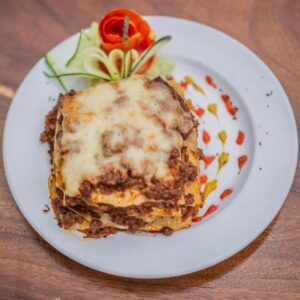
Lasagna is basically a layered pasta dish.
That’s it.
No complicated explanation needed.
You take flat pasta sheets, stack them with sauce, cheese, and filling, then bake everything until it turns into something rich and unified.
Simple idea. Big result.
But the story behind it? That’s where it gets a bit deeper.
Where Lasagna Comes From
When I first looked into its history, I expected a neat answer. One clear origin. One clean story.
Instead, I got something older and messier in a good way.
The name itself goes back to ancient roots. It originally referred more to a cooking vessel than the food itself. Which is funny if you think about it. It’s like naming a meal after the pot it was cooked in.
Over time, things shifted.
People started layering ingredients. Pasta evolved. Sauces became richer. Cooking styles improved slowly, generation by generation.
Italy played a huge role in shaping it into what we recognize today. Families passed down versions of it, each adding small changes. Nothing rushed. Nothing forced. Just gradual improvement over time.
And somehow, even with all that history, it still feels current.
That’s not common for food.
Traditional vs Modern Lasagna
This is where things get personal for me.
Traditional style
The first time I tried a traditional version, I noticed something right away it wasn’t trying too hard.
Everything felt balanced.
- Thin pasta layers
- Slow-cooked sauce with deep flavor
- Creamy textures that softened every bite
Nothing was loud. Nothing was trying to steal attention. It just worked quietly together.
It felt steady. Calm. Almost patient.
Like it wasn’t in a hurry to prove anything.
Modern versions
Then I tried modern takes on lasagna.
At first, I was skeptical. I thought, why fix something that already works?
But curiosity won.
And I’m glad it did.
Modern lasagna doesn’t stick to one shape. It experiments. It adapts.
I’ve seen versions that:
- Cook faster for busy days
- Use lighter ingredients
- Add unexpected twists in flavor
- Skip traditional steps entirely
Some of them were okay. Some were confusing. But the good ones proved something important.
Lasagna isn’t fragile.
It doesn’t fall apart when you change it. It adjusts. It bends. It survives.
And that makes it even more interesting.
My Lasagna Story: Layers, Mess, and Learning It the Hard Way
I didn’t grow up “knowing” lasagna. I learned it the way most people learn things they underestimate at first by messing it up, a lot.
The first time I tried making it, I genuinely thought it would be simple. Just stack things, bake, eat. Easy.
Yeah… no.
That first tray came out looking like it had survived a small kitchen disaster. The top was burned in one corner, watery in another, and when I cut into it, everything slid like it was trying to escape my plate.
I just stood there thinking, so this is how confidence gets punished.
But I kept going back to it. Because something about lasagna sticks with you. It’s not just food. It’s layers of effort, patience, and small mistakes that add up fast.
III.What I’ve Learned About Building Lasagna
1. The Pasta Layers Matter More Than I Thought
I used to treat noodles like they were just… there. A background thing. A base.
I was wrong.
Now I know they run the whole show.
Different noodles, different moods
There are the regular dried sheets, the no-boil ones, and fresh pasta sheets.
- Dried noodles feel strict. Like they expect instructions for everything.
- No-boil noodles feel like cheating, but honestly, I still use them when I’m tired or lazy. No shame.
- Fresh sheets feel fancy. Like I should be wearing an apron that costs more than my rent just to touch them.
And here’s the truth I learned the hard way: if you don’t treat noodles right, they will absolutely expose you.
I once under-sauced a layer, and those noodles stayed stiff like they were protesting. Every bite felt like chewing disappointment. Not fun.
Now I respect them. I don’t argue. I just give them what they need.
2. The Sauce Is Where Everything Lives or Dies
If lasagna has a personality, sauce is it.
Tomato sauce moments
When tomato sauce is cooking right, my kitchen smells like I’ve got my life together. It’s fake confidence, but I enjoy it.
When I rush it, though, it turns sharp. Harsh. Like it’s angry I didn’t give it time.
So now I slow down. Stir. Taste. Stir again. It’s almost like the sauce teaches patience whether I like it or not.
White sauce taught me fear
The first time I made white sauce, I looked away for “just a minute.”
That minute turned into panic.
It thickened too fast, started sticking, and I nearly burned the whole thing. I saved it, but barely.
Since then, I don’t trust white sauce. I respect it. There’s a difference.
It demands attention. If I walk away, it punishes me immediately.
Meat sauce vs veggie sauce
Meat sauce is loud. It fills the pan, takes over, makes its presence known.
Vegetable sauce is quieter. More subtle. I didn’t expect to like it, but mushrooms changed my mind. They bring this deep, earthy taste like they’ve lived a few stories I don’t know about.
I used to think lasagna needed meat to feel real.
Now I know that’s not true. It just needs character.
3. The Filling Is Where I Get a Little Reckless
This is the part where I stop measuring things properly and start “trusting myself,” which is always dangerous in cooking.
Cheese chaos
I never really measure cheese. I just… add.
Ricotta makes it soft and calm. Mozzarella makes it stretchy and dramatic. Parmesan adds that slightly serious tone, like it’s judging my life choices while melting.
Together, they somehow behave like they’ve been best friends forever.
Sometimes I go too far, and it becomes a cheese flood. Not always bad. Just intense.
Meat decisions
Beef is my default. It just works.
Chicken feels lighter, like I’m trying to be responsible for once.
Mixed meat happens when I can’t make decisions in life in general. So I just throw everything in and hope for peace.
But I’ve learned one important rule: bland meat ruins everything. You can hide a lot of mistakes in lasagna, but not that one.
I’ve tried. It doesn’t work. It just tastes like regret with cheese on top.
Vegetables surprised me
I used to think veggie lasagna was just a “healthy version” of the real thing.
Now I don’t think like that anymore.
Spinach melts into the layers. Mushrooms add depth. Zucchini softens everything like it’s trying to calm the whole dish down.
It doesn’t feel like a replacement. It feels like a different story.
4. Cheese on Top Is Emotional
The top layer is where I either feel proud… or slightly nervous.
The topping routine
Mozzarella goes on first. Always. No debate.
Parmesan follows. It feels like a finishing signature.
Sometimes I add cheddar when I’m feeling a bit rebellious, like I’m breaking a small rule nobody cares about but me.
I don’t overthink it anymore. I just cover everything and step back like, well, let’s see what happens.
Waiting for the bake
I used to pull it out too early.
Impatience is expensive in lasagna-making.
Now I wait for the top to brown slightly, bubble in the corners, and look like it’s alive for a second. That’s the moment I trust it.
If I rush it, I regret it every time.
Every. Single. Time.
IV.The Lasagnas I Keep Coming Back To
1. Classic Lasagna
This is my “reset button” version.
Pasta, sauce, cheese. Repeat.
Simple idea. Not simple execution.
When it’s right, I don’t even talk while eating. I just sit there quietly like I’ve been emotionally handled by food.
When it’s wrong, it collapses when cut. That’s always a humbling moment.
2. Vegetable Lasagna
This one surprised me.
It started as an experiment. Now it’s something I actually crave.
It feels lighter, but not empty. Like I can eat it and still function afterward, which is a rare luxury.
3. White Sauce Lasagna
This one is heavy in a good way.
Creamy, rich, slow.
Chicken keeps it grounded. Spinach keeps it from going overboard.
Without balance, it becomes too much very quickly. Like wearing a winter coat indoors.
4. Vegan Lasagna
I didn’t expect much at first.
But I was wrong again.
Cashew sauces, plant-based cheese, nutritional yeast it all felt unfamiliar at first. Not bad. Just different.
The biggest lesson here was simple: stop comparing it. Once I did that, it started tasting better.
It doesn’t pretend to be something else. It just is what it is.
5. Gluten-Free Lasagna
This one taught me patience I didn’t know I had.
Some sheets break easily. Some behave better than expected. Nothing is predictable.
I’ve had trays shift after baking like they had their own ideas.
So now I build it carefully. Like I’m handling something slightly unpredictable but worth it.
What Lasagna Taught Me (Without Trying To)
Lasagna never turns out the same twice for me.
Sometimes it’s perfect. Sometimes it leans a bit. Sometimes it falls apart the moment I cut it.
And I used to chase perfection.
Now I don’t.
Now I just build it layer by layer, accept the mess, and trust the oven to do its part.
Because honestly, it’s not just about stacking food.
It’s about learning that things don’t always hold together perfectly and that’s okay.
And if a slice slides a little on the plate?
Well… I just call it “rustic” and eat it anyway.
V. Step-by-Step Guide to Making Lasagna (From My Own Messy Kitchen Experience)
Lasagna and I? We’ve had our ups and downs. Some days it behaves like a loyal friend. Other days it turns the kitchen into a battlefield. I’ve burned corners, flooded layers with sauce, and once pulled out a slice that looked like it had lost all motivation in life.
And yet… I keep making it.
Because when it turns out right, it doesn’t just taste good. It feels like a small win you didn’t see coming.
So here’s how I actually make it not in a polished, perfect-chef way, but in a real kitchen, with real mistakes, and a bit of stubborn hope.
1. Preparation (Where I Try Not to Mess Anything Up Early)
Before anything hits heat, I clear the space. I learned this the hard way. A messy kitchen at the start usually means chaos by the end.
So I stop everything and prep like I mean it.
No half work. No “I’ll do it later.” That “later” once made me forget garlic, and trust me, lasagna remembers your mistakes more than you do.
Here’s what I set up:
- Sauce ready, thick, and steady (not watery like it’s confused about its identity)
- Pasta sheets boiled or ready to use straight from the pack
- Cheese mixed and waiting like it knows it’s important
- Cooked fillings cooled slightly so nothing goes wild in the heat
One thing I’ve learned clearly: if something still feels like it’s “almost done,” it doesn’t belong in the lasagna yet.
2. Layering (The Moment Everything Either Works or Fails Quietly)
This part always feels like building something that could either stand tall or fall apart with a sigh.
I start with sauce at the bottom. Always. I didn’t used to, and I paid for it once scraped pasta off the dish like I was removing dried cement.
Then I build it up:
- Pasta
- Sauce + filling
- Cheese
- Repeat
Simple on paper. Slightly dramatic in real life.
But here’s the truth I learned the slow way: don’t get carried away with sauce.
Too much and everything slides into chaos. Too little and it turns dry, like it gave up halfway through life.
And cheese… cheese is tricky. It feels like comfort and temptation rolled into one. I’ve added too much before, thinking it would “fix everything.” It didn’t. It just made things heavier, not better.
I also take my time spreading each layer. If I rush, everything shifts unevenly, and later the slices look like they survived an earthquake.
3. Baking (Where I Stop Controlling Everything)
Once it’s in the oven, I step back. No more touching. No more checking every five minutes like I can influence fate.
I set it around 180°C and let it do its thing.
First, I cover it with foil. Like tucking it in. That traps heat and moisture so everything inside melts together properly. I once skipped this step and ended up with a dry top that tasted like disappointment with seasoning.
After about 30 minutes, I remove the foil.
That’s when things get interesting.
The smell changes. The cheese starts bubbling like it has opinions. The edges darken slightly, and suddenly the kitchen feels like it knows what it’s doing even if I still don’t fully trust myself.
I watch closely here. Because there’s a thin line between golden and beautiful… and why did I forget it again.
I’ve crossed that line more than once. Not proud of it.
4. Resting and Serving (The Hardest Discipline in Cooking)
This is where I struggle every single time.
Because the smell? It’s basically emotional manipulation.
But I’ve learned the truth the hard way: cutting it too early ruins everything. It collapses like it’s tired of existing.
So I wait.
About 15–20 minutes.
During that silence, something important happens. The layers settle. The sauce thickens slightly. Everything becomes more stable, like it finally agrees to stay in place.
It feels slow. Almost unfair. But necessary.
When I finally cut it, I use a sharp knife and go straight down. No dragging. No fixing mid-slice. That only makes things worse.
A good slice stands up on its own. If it leans, slides, or falls apart, I already know where I rushed.
And honestly… I always know.
VI. Common Mistakes I’ve Personally Made (So You Don’t Have To)
I’ve made enough lasagna mistakes to qualify as experience through suffering. Here are the big ones.
1. Overloading Layers
At one point, I thought more layers meant more success.
It doesn’t.
It just creates a tall, unstable structure that struggles to cook properly. Mine once looked impressive but tasted like confusion baked into food form.
2. Sauce Imbalance
I’ve gone both directions:
- Too much sauce → basically soup pretending to be lasagna
- Too little → dry layers that feel like effort without reward
Now I aim for balance. Enough to connect everything. Not enough to drown it.
3. Skipping Rest Time
This is the mistake that still haunts me.
Every time I got impatient and cut early, the whole thing collapsed instantly. Like it was waiting for me to mess up.
Lasagna doesn’t forgive impatience. It just exposes it.
4. Wrong Dish Choice
Once, I used a shallow pan because I didn’t feel like washing a bigger one.
Bad idea.
It overflowed, burned at the edges, and turned my oven into a place of regret for a few days.
Now I only use a deep dish. No shortcuts. No excuses.
VII. Tips for Perfect Lasagna Every Time
I still laugh a little when I think about my early lasagna attempts. The kind of laugh you do when something is both funny and slightly painful. I’d pull it out of the oven thinking, “Yes, this is it.” Then reality would hit me in the face like a hot wave of steam.
It looked fine at first glance. But once I tried to slice it… everything slid. Layers collapsed. Cheese went one way, sauce went the other. It wasn’t lasagna anymore. It was more like a delicious landslide.
Still edible though. Just not something you proudly serve.
That’s when I started paying attention to the small things. Not the flashy stuff. The quiet details. The kind that don’t get talked about much but decide everything in the end.
Balancing flavors without overthinking it
At one point, I made the mistake of treating lasagna like it needed a big performance. I added more cheese, more salt, more sauce basically more of everything. I thought I was improving it.
I wasn’t.
The taste became loud. Not exciting loud. More like a crowded room where everyone talks at the same time and nobody listens. After a few bites, it just felt heavy.
Now I do the opposite. I keep things calm.
I let the sauce do its job without taking over everything. Cheese becomes the smooth connector, not the main attraction. Meat or vegetables step in, do their part, and step back again. Even herbs just enough to make things feel alive, not like I dumped a whole garden into the pot.
When it works, it’s almost quiet in a strange way. The flavors don’t fight. They settle into each other like they finally agreed to stop arguing.
And honestly, that’s when lasagna tastes its best.
Getting the right texture (this is where things usually go wrong)
If flavor is the personality, texture is the behavior. And I’ve seen lasagna behave badly.
Too wet, and the layers slide apart like they’re trying to escape the situation. Too dry, and it turns stiff, like it’s holding a grudge against the knife.
I’ve had both disasters sitting on my table.
What fixed it wasn’t magic. It was control.
Not too much sauce between layers. Just enough so everything stays moist but still structured. I learned that “more” is not always better. Sometimes it’s just… more mess.
But the real turning point was patience. I used to cut into lasagna right away. The smell would be amazing, the cheese bubbling, and I’d think, “I can’t wait.”
So I’d slice it immediately.
Big mistake.
Steam would rush out like it was escaping prison. Layers would collapse like a tired building. It still tasted fine, but the structure was gone.
Now I wait.
It’s not easy. I stand there sometimes, staring at it like it owes me money. But I let it rest. And something interesting happens during that time. Everything settles. The layers firm up. The slices hold.
It goes from messy comfort to clean comfort.
That pause makes all the difference.
Make-ahead strategies that actually save time
There’s a small kind of peace in knowing dinner is already halfway done before the day even gets stressful.
Lasagna fits into that idea perfectly.
I often build it earlier in the day, or even the night before. I just layer everything, cover it, and let it sit in the fridge like it’s taking a long nap.
No stress. No noise. Just quiet waiting.
What I’ve noticed is that time actually improves it. The sauce sinks in. The flavors settle. Everything becomes a bit more connected, like they’ve had time to get to know each other properly.
But I did learn one mistake the hard way.
Too much sauce overnight is dangerous. It keeps absorbing, and suddenly you’re not making lasagna anymore you’re making something closer to a very confused casserole soup. Still edible, but not what you planned.
So now I keep it balanced. Enough moisture, but not a flood.
Simple rule, big difference.
Freezing and reheating without ruining it
Freezing lasagna feels a bit like sending a meal into the future.
I like that idea. Like I’m doing a favor for my future self who will open the freezer one day and feel like life is slightly more under control.
I usually assemble it first, wrap it tightly, and freeze it flat. That part matters more than people think. If it’s uneven, it becomes annoying later. If it’s tight and neat, it survives the cold better.
When it’s time to use it again, I don’t rush.
I thaw it in the fridge. Not on the counter. I made that mistake once and ended up with uneven texture and regret as a side dish.
Reheating is slow and gentle. Low heat. Covered. No rushing like I’m late for something.
Sometimes I add a little extra sauce if it looks dry. It’s like giving it a second chance to shine.
And there’s something satisfying about it pulling out a lasagna you made weeks ago, like it was quietly waiting for its moment.
VIII. Easy and Quick Lasagna Recipes
Not every day feels like a cooking project. Some days are loud, messy, and full of small problems that don’t care about your dinner plans.
On those days, I don’t want effort. I want something that works without asking too much from me.
Lasagna still fits but in a simpler way.
No-boil lasagna (the quiet shortcut I stopped doubting)
I used to look at no-boil noodles with suspicion. It felt like cheating. Like something had to go wrong somewhere.
But one tired evening changed my mind.
I used them because I didn’t feel like dealing with boiling water or extra dishes. I just layered everything and hoped for the best.
It worked.
The noodles absorbed moisture while baking, softening perfectly. No extra steps. No waiting around. Just simple assembly and patience.
The only rule I follow now is important: make sure everything is covered properly with sauce. Any dry corner will stay dry, and that’s where disappointment hides.
The result is soft, warm, and comforting. And it somehow feels like it took more effort than it really did.
I don’t correct people when they assume it took longer.
Some illusions are harmless.
One-pan lasagna (less mess, same comfort)
The first time I tried one-pan lasagna, I honestly didn’t expect much.
It felt too simple. Like lasagna is supposed to involve layering and care and at least a little struggle. Not just throwing everything into one pan like it’s a quick experiment.
But I was wrong.
It works.
Everything cooks together in a way that feels slightly chaotic at first, but it settles into something surprisingly balanced. The flavors blend just enough. Nothing gets lost, but nothing dominates either.
And the best part? Fewer dishes.
That alone makes it feel like a small victory.
It’s the kind of meal that doesn’t demand attention. It just fits into your day and behaves itself.
Weeknight-friendly versions (fast food, but homemade life)
On weeknights, I don’t want drama in the kitchen. I want food that shows up, does its job, and lets me sit down sooner.
So I strip things down.
Simple noodles. Basic filling. One strong sauce. No extra steps that exist just to make the recipe look impressive.
Sometimes I even laugh while making it because it feels too easy compared to the complicated versions I used to stress over. I remember thinking cooking had to feel hard to be good.
That wasn’t true.
Now I know something better.
Good food doesn’t always ask for effort. Sometimes it just asks to be made with care, even if it’s simple.
And on tired nights, that’s enough.
Not fancy. Not perfect. Just warm, steady, and real.
IX. Healthy Lasagna Alternatives
The way I still enjoy it without feeling like I swallowed a brick
I’ve always loved lasagna. The smell alone can drag me into the kitchen like I’ve got no free will left. One whiff and I’m already reaching for a plate.
But I learned something the not-so-fun way. A heavy slice doesn’t just fill you up. It slows you down. Like your body suddenly decides it’s nap time, whether you agree or not.
So I started changing it. Not to “fix” lasagna. Never that. More like tweaking it so I can eat it more often without turning into a couch statue afterward.
Low-carb versions
The first time I replaced pasta with vegetables, I honestly didn’t expect much. I thought I was heading straight into disappointment territory.
Surprise it worked.
It didn’t feel like punishment food. It felt lighter, cleaner, but still very much like lasagna. The comfort was still there, just not the heavy aftermath.
What I use instead of pasta sheets:
- Thin zucchini slices
- Eggplant strips
- Lightly blanched cabbage leaves
Zucchini gave me the biggest lesson. I didn’t drain it properly once, and the whole dish turned into something between soup and regret. Still edible, but let’s just say I stared at it in silence for a while.
How it actually feels:
- Less heaviness after eating
- Fresher taste overall
- Still layered, still satisfying
Same comfort, just without the “I need to lie down and question life choices” feeling.
High-protein versions
There was a point where I noticed something annoying. Lasagna filled me up… but not for long. A few hours later, I was hunting snacks again like it was a second job.
So I shifted focus. Less “just cheese and hope,” more real protein.
What I changed:
- Lean chicken or turkey instead of fatty beef
- Lentils mixed into the sauce
- Cottage cheese instead of heavy ricotta
- Extra eggs for structure in the layers
Lentils were the quiet hero here. They don’t shout. They just blend in like they’ve always belonged.
What got better:
- I stayed full much longer
- Less random snacking
- More steady energy after meals
It stopped feeling like a guilty pleasure and started behaving like actual fuel.
Reduced-fat versions
I don’t believe in stripping fat completely. That usually ends badly. Dry food, sad texture, and a flavor that feels like it gave up halfway through.
So I don’t remove fat. I just calm it down a bit.
What I adjust:
- Part-skim mozzarella instead of full-fat
- Yogurt or milk instead of heavy cream
- Less oil in the sauce
- More herbs to bring depth back
And here’s a small trick I swear by: a pinch of nutmeg in white sauce. Just a little. It doesn’t announce itself, but suddenly everything tastes richer without feeling heavy.
The result:
- Creamy but not greasy
- Easier on the stomach
- Still rich, just more controlled
It’s like lasagna went through a “life balance” phase.
Quick comparison
| Version | What changes | How it feels after |
|---|---|---|
| Low-carb | No pasta, more vegetables | Light, fresh |
| High-protein | Lean meat, lentils, eggs | Full for longer |
| Reduced-fat | Lighter dairy, less oil | Creamy without heaviness |
X. Best Side Dishes to Serve with Lasagna
What actually makes the plate feel complete
Lasagna alone is strong. Almost too strong sometimes. It doesn’t ask for attention it takes it.
But I noticed something over time. The sides decide whether the meal feels balanced or like a food avalanche.
Fresh salads
If there’s one side I never skip now, it’s salad. It acts like a reset button for your taste buds.
My go-to combinations:
- Lettuce, cucumber, lemon dressing
- Tomato and onion with olive oil and salt
- Arugula with light vinaigrette
Arugula is the real wake-up call. It has that peppery bite that cuts through all the cheese like it means business.
Why it matters:
- Lightens the whole meal
- Adds freshness
- Stops everything from feeling too heavy
Without it, the plate feels a bit stuck. Like it forgot to breathe.
Garlic bread
Garlic bread is loud. No other word fits it better. It doesn’t sit quietly on the plate it shows off a little.
My lighter versions:
- Olive oil instead of butter
- Thin slices instead of thick chunks
- Whole grain bread when I’m feeling responsible
- Light cheese instead of overload
I’ve made the mistake of going too hard on garlic bread more than once. Suddenly it’s not a side anymore it’s competing with the lasagna for attention.
Why it works:
- Crunch against soft pasta layers
- Strong flavor contrast
- Makes everything feel complete
It’s not subtle. But it’s honest.
Light soups
Soup before lasagna used to feel unnecessary to me. Like overkill. But I tried it once properly, and it changed the whole rhythm of the meal.
Best choices:
- Clear vegetable broth
- Light tomato basil soup
- Simple chicken broth
Nothing thick. Nothing heavy. Just warm and easy.
What it does:
- Gently prepares your stomach
- Slows down eating
- Helps avoid overeating
It’s basically a warm-up before the main event… except the “event” is a very cheesy, very confident dish.
XI. Storage and Reheating Guide (From My Own Kitchen Routine)
I’ve made enough trays of lasagna to know one thing for sure: the cooking part is the easy win. The real test comes later when the oven is off, the kitchen is quiet, and that big pan of leftovers is just sitting there like it owns the fridge.
That’s usually the moment I stand there thinking, “Alright… how do I not ruin this masterpiece now?”
Because yes, lasagna is generous. But it can also turn on you if you treat it carelessly.
So over time, I stopped guessing and started doing things a certain way. Nothing fancy. Just habits that keep it tasting like something I actually want to eat again.
Refrigeration Tips (Don’t Rush This Part)
I learned this the messy way: hot lasagna + fridge = regret.
Early on, I used to shove it straight into the refrigerator while it was still steaming. It felt efficient at the time. It was not. What I got later was soggy layers and a texture that felt like it had given up on life.
Now I slow it down.
Here’s what I do every time:
- I let the lasagna rest until it’s warm, not hot
- I cover it tightly with foil or a proper airtight lid
- I keep it on a flat shelf so nothing tilts or shifts
That’s it. Nothing dramatic. Just patience.
Stored this way, it comfortably lasts 3 to 5 days in the fridge. After day five, it’s not dangerous immediately, but the magic starts fading. The texture gets tired. The sauce loses its confidence.
One thing I didn’t expect when I started cooking more: lasagna actually improves after a night in the fridge. Day one is good. Day two? That’s when it settles in. The layers stop arguing. Everything feels more “together,” like it finally agreed on something overnight.
Funny how food can behave more mature than people sometimes.
Freezing Instructions (A Future-You Gift)
Freezing lasagna feels a bit like doing a favor for someone who hasn’t woken up yet your future self.
I started freezing it when I realized there are days when cooking from scratch feels like climbing a small mountain with no shoes.
So now I prep it properly.
Here’s my method:
- I let the lasagna cool completely (no shortcuts, no cheating)
- I cut it into individual portions
- I wrap each piece tightly plastic wrap first, then foil over it
- I store everything in a freezer-safe bag or container
That double wrap matters more than people think. Freezer burn is like time slowly stealing the flavor away, and I’m not here for that.
It lasts about 3 months in the freezer with good quality.
I once found a piece after longer than that. It was technically edible. But let’s just say it had the energy of something that had been through too many winters alone. I ate it out of curiosity. Not joy.
Still, on normal timelines? Frozen lasagna is a lifesaver. It just sits there quietly, waiting like a backup plan you actually trust.
Reheating Without Ruining Everything
Reheating is where things go one of two ways: either it comes back soft and rich… or it turns into a dry disappointment that needs emotional support.
I’ve seen both.
Now I stick to a few methods depending on my mood and patience level.
Oven Method (My Reliable Choice)
When I have time, I always go with the oven. It’s the closest thing to bringing the lasagna back to life properly.
My routine:
- I cover it with foil so it doesn’t dry out
- If it looks a bit stiff, I add a small splash of water or extra sauce
- I heat it at medium temperature for about 20–30 minutes
What comes out feels almost fresh. The cheese softens again. The layers behave. It doesn’t feel like leftovers it feels like a second round.
It’s not fast, but it’s worth it.
Microwave Method (The “I’m Hungry Now” Option)
This is my survival mode.
We’ve all been there. No patience. No time. Just hunger making decisions.
Here’s how I try not to ruin it completely:
- I add a spoon of water or sauce on top
- I cover it loosely (not sealed tight steam needs space)
- I heat it in short bursts, not one long blast
If I rush it, I pay the price. Dry edges, uneven heat, cheese that behaves like it has given up on melting.
Still, when done carefully, it gets the job done. Not elegant, but effective.
Stovetop Method (Underrated and Honestly Kind of Smart)
This one surprised me.
I only use it when I have a single slice and don’t want to turn on the oven. But it works better than expected.
My approach:
- Low heat only
- A small splash of water added to the pan
- Lid on to trap steam
The steam does the heavy lifting. It gently warms everything without drying it out.
It’s not flashy, but it respects the food. And honestly, that’s enough.
XII. Frequently Asked Questions (From Real Kitchen Moments)
These are the questions that kept coming up in my kitchen until I stopped pretending I didn’t already know the answers.
Can lasagna be made ahead of time?
Yes and I actually prefer it that way now.
I usually assemble it a day before baking and let it sit in the fridge overnight. Something interesting happens during that rest. The sauce spreads a little. The layers settle. Everything feels less chaotic.
Then the next day, when it bakes, it holds its shape better. It slices cleaner. It behaves like it finally grew up overnight.
If impatience is the enemy of good lasagna, then this step is the quiet solution.
How long does lasagna last?
I’ve tested this more than I should admit.
- Room temperature: about 2 hours max
- Refrigerator: 3–5 days
- Freezer: up to 3 months
After day five in the fridge, it starts losing personality. It’s still edible, but the joy fades a bit. Like a song played too many times in a row.
What’s the best cheese for lasagna?
This is where people get passionate fast.
My personal combination is simple:
- Mozzarella for melt and stretch
- Ricotta for creamy layers
- Parmesan for sharp flavor
Sometimes I add a bit of provolone when I want it richer. That’s my “don’t ask questions, just enjoy it” version.
And honestly, if the cheese doesn’t stretch when you pull a slice, something feels off. That stretch is part of the experience. It’s like the dish saying, “Yes, I’m still alive.”
Can you freeze cooked lasagna?
Yes, and it freezes surprisingly well if you treat it right.
My rules are simple:
- Cool it completely first
- Freeze in portions so I don’t thaw everything at once
- Wrap it tightly to protect the texture
When reheating, the oven gives the best result. Microwave works too, but only if you bring back some moisture.
Frozen lasagna is one of those quiet comforts. It sits there, no noise, no drama, just waiting for a day when I don’t feel like cooking but still want something that feels like home.
And honestly? That’s the real win.
XIII. Final Thoughts: The Comfort of Lasagna Recipes (My Way of Seeing It)
I don’t really know when lasagna stopped being just food for me and started feeling like something else. Maybe it was the first time I pulled a tray out of the oven and stood there a little too long, just watching it bubble like it had a life of its own. Or maybe it was later, after a few more tries, when I realized I wasn’t just cooking dinner anymore I was building something that people actually slowed down for.
Lasagna has this strange personality. It doesn’t shout for attention. It doesn’t try to impress anyone at first glance. It just sits there in layers, calm and heavy, like it knows it will win you over eventually. And honestly, it usually does.
It’s funny… people talk about food like it needs to be explained. But lasagna? It doesn’t care about explanations. It just works. Still, I find myself thinking about it more than I should, like I’m trying to figure out why something so simple feels so complete.
Why lasagna feels like home to me
I’ve noticed something over time. The moment lasagna is ready, the whole atmosphere in a room shifts.
Not in a loud, dramatic way. Nothing like fireworks or celebrations. It’s quieter than that. Softer. Almost like the world decides to breathe a little slower for a moment.
When I open the oven, there’s always that first wave of heat hitting my face. Then the smell comes out warm, rich, familiar. It fills the kitchen so quickly it feels like it’s claiming the space.
The edges are usually bubbling like they’ve been waiting for this moment their whole life. The cheese stretches slightly when I lift the knife, like it doesn’t really want to let go. And for a second, everything just pauses.
Even if the day was messy late emails, missed plans, random stress that didn’t even make sense lasagna doesn’t ask about it. It doesn’t judge. It just lands on the table like it belongs there.
And that’s what makes it feel like home to me.
Home isn’t always about a place. It’s about feeling like things are allowed to be simple. Familiar. Repeated without boredom. Lasagna does exactly that.
Layer after layer. Sauce, pasta, filling, cheese. Same pattern, but never exactly the same feeling twice. It’s strange how something so repetitive can still feel warm every single time.
Sometimes I think lasagna is less about eating and more about remembering. Like every slice is holding a bit of something unspoken family dinners, quiet nights, random laughter that came out of nowhere.
I don’t just see food when I look at it. I see comfort stacked neatly in a tray.
How lasagna quietly slows everything down
There’s also something I can’t ignore about how lasagna changes people.
It slows them down.
Not in an obvious way. Nobody suddenly freezes or becomes dramatic about it. It’s more subtle. Like people just… stay a little longer at the table.
Conversations stretch. Forks move slower. Even silence feels comfortable instead of awkward.
I’ve watched it happen more than once. Someone takes a bite, pauses, then leans back slightly like their brain just decided to take a short vacation.
It’s kind of funny, actually. In a world where everything moves fast messages, deadlines, plans lasagna shows up like, “No, we’re not rushing this.”
And nobody argues with it.
The part where I realized lasagna isn’t strict at all
At first, I thought lasagna was serious food. Structured. Almost stubborn. Like it had rules written in stone.
But that changed the more I cooked it.
One day I added a little extra garlic without thinking too much about it. Another time, I swapped a cheese because I ran out and didn’t feel like going back to the store. Once, I even threw in vegetables that had no business being there, just because they looked like they wanted attention.
And something surprising happened.
It still worked.
That’s when I realized lasagna is more forgiving than it looks. It bends a little. Adjusts. Accepts changes without falling apart completely.
Of course, not every attempt is perfect. I’ve had layers slide like they were trying to escape. I’ve had sauce spill over like it had emotional problems. I’ve even had slices that refused to stand up straight, collapsing into something closer to “lasagna soup” than lasagna.
But even then… it still tasted good. Just different. A little messy, a little unpredictable, but still familiar enough to recognize.
That’s comforting in its own way.
It reminds me that things don’t have to be perfect to be worth repeating.
What experimenting really taught me
Over time, I stopped thinking of lasagna as something I had to “get right.”
Instead, I started seeing it like a conversation.
Every time I cook it, I’m talking to it in a quiet way. I change something, and it responds. I add more herbs, and it shifts its mood. I go lighter on the sauce, and suddenly it feels calmer. I make it richer, and it becomes something heavier, more intense.
It’s not rigid. It listens.
And I think that’s why I keep coming back to it.
There’s something satisfying about a dish that doesn’t punish you for experimenting. It doesn’t shut down when you make a mistake. It just becomes a slightly different version of itself.
Sometimes better. Sometimes just… different.
But always still lasagna.
A simple truth I keep learning in the kitchen
I used to think cooking was about control. Measuring everything perfectly. Following steps like a checklist. Making sure nothing goes wrong.
But lasagna slowly changed that idea for me.
It made me realize cooking is more like negotiation than control. Heat changes things whether you like it or not. Time does its own thing. Ingredients react in ways you don’t always expect.
And somewhere in all that chaos, something meaningful still forms.
Not perfect. Not identical every time. But real.
Lasagna, in particular, feels like it keeps a record of how you made it. A little more patience here. A bit of risk there. A moment where you thought, “Let’s just try this,” without really knowing what would happen.
Those small decisions matter more than we think.
They don’t just change the dish. They give it character.
I didn’t need to reinvent lasagna. I just needed to stop letting it knock me out every time I ate it.
A lighter base, a bit more protein, less unnecessary fat, and the right sides on the plate that’s enough.
Lasagna is still comfort food. I just prefer my comfort without the post-meal collapse on the couch like I’ve lost a fight I didn’t sign up for.
Lasagna isn’t complicated. It’s just honest.
If I rush it, it shows.
If I ignore balance, it falls apart.
If I respect it, it rewards me.
And maybe that’s why I still make it. Not just for the taste but for the reminder that some things can’t be hurried.
Standing in a quiet kitchen, waiting for cheese to turn golden, feels simple. Almost too simple.
But in a strange way… it’s one of the few times everything slows down enough to make sense.
If there’s one thing I’ve learned from making and eating lasagna, it’s this:
It doesn’t demand perfection.
It just asks you to build it slowly, layer by layer, and trust the process a little.
Sometimes the layers slide. Sometimes it looks messy. Sometimes you get impatient and cut it too early because the smell is basically calling your name.
I’ve done all of that.
And you know what?
It still turns out good.
Not perfect. But good enough to make you pause for a second bite.
And maybe that’s exactly why lasagna never goes out of style.
I keep coming back to
If I had to sum it up, I’d say lasagna isn’t really about food.
It’s about what happens around it.
The waiting. The smell. The way people gather without being asked. The way a simple tray on a table can turn a normal day into something that feels a little more complete.
It doesn’t need attention to matter. But it gets it anyway.
And maybe that’s why I keep making it, even when I don’t need to.
Because in the end, lasagna reminds me of something simple I forget too often:
Good cooking isn’t about getting everything right every single time.
It’s about building something warm enough that people don’t care if it’s perfect… they just want another slice.
Calculate Recipe Calories
World Trade Center Footage | Webex Costs | Virtual Data Rooms | Structures Annuity Settlement | Sell Annuity Payment | Neuson | Online Classes | Nunavut Culture | Online College Course | Motor Replacements | Motor Insurance Quotes | Mortgage Adviser | Met Auto | Tax credit | Help desk software | Home refinancing | Urgent care | Marketing integration | Debt relief | Bitcoin | Fitness center software | Insurance | Gas | Electricity | Weight loss | Sell house for cash | Automotive repair | Loans | Internet marketing | Mortgage | Attorney | SEO specialist | Lawyer | Donate | Conference Call | Treatment | Degree | Software | Credit | Classes | Investing | Recovery | Trading | Rehab | Hosting | Cord Blood | Claim | Automotive warranty | Paintless dent repair | Mesothelioma Law Firm | Massage School Dallas Texas | Low Credit Line Credit Cards | Life Insurance Co Lincoln | Insurance Companies | Injury Lawyers | How to Donate A Car in California | Home Phone Internet Bundle | Holland Michigan College | Royalty-Free Images Stock | Register Free Domains | Psychic for Free | Ph.D. in Counseling Education | Personal Injury Lawyers | Personal Injury Law Firm | PaperPort Promotional Code | Online Stock Trading | Online Motor Insurance Quotes | Donate your Car for Money | Online Colleges | Health Records, Personal Health Record | Hard drive Data Recovery Services | Donate Old Cars to Charity | Forex Trading Platform | Forensics Online Course | Donate Car to Charity California | Donate Car for Tax Credit | Car Insurance Quotes PA | Email Bulk Service | Donating Used Cars to Charity | Donating a Car in Maryland | Donate Your Car Sacramento | Online Criminal Justice Degree | Donate Your Car for Kids | Futuristic Architecture | Donate Cars in MA | Data Recovery Raid | Mesothelioma | A car accident lawyer | Personal injury lawyer | AC repair | Lawsuit settlements | Car insurance | Flood recovery | Water damage restoration | Rehab doctors | Online degree | Online master’s degree | Doctoral programs | Hail car insurance