
I. Introduction to Kimchi
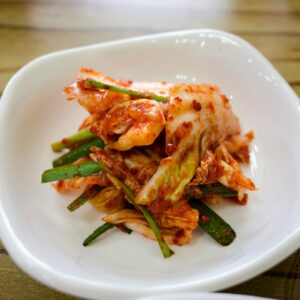
I didn’t grow up eating kimchi. Not even close. The first time I faced a plate of it, I hesitated like it might bite back. The smell? Sharp. Loud. Almost rebellious. It hit my nose and said, “You sure about this?”
I wasn’t.
Still, curiosity won. I took a bite small, cautious, like stepping into cold water. And wow. Crunch first. Then heat. Then this deep, tangy punch that crept in slowly and refused to leave. I paused. Blinked. Took another bite.
That’s how it started.
Calculate Recipe Calories
Somewhere between confusion and surprise, I realized I wasn’t just eating food. I was stepping into something layered, something alive. Kimchi didn’t just sit on the plate it spoke. Loudly.
What Kimchi Is and Why It Matters
To me, kimchi isn’t just fermented vegetables. That definition feels… flat. Technically correct, sure, but it misses the soul of it.
Yes, it’s often napa cabbage mixed with chili, garlic, ginger, and salt. But honestly, that’s just the beginning. That’s like calling the ocean “just water.”
Every time I make kimchi, it feels different. Same ingredients. Same steps. Yet somehow, each batch develops its own attitude.
Some jars turn bold and fiery like they’ve got something to prove. Others mellow out, calm and balanced, like they’ve figured life out before I have.
That’s what keeps pulling me back.
There’s this quiet transformation happening inside the jar. I mix everything together, pack it tight, close the lid… and then I wait. No stirring. No fixing. No overthinking. Just time doing what time does best.
And when I come back? It’s changed.
Deeper. Tangier. Fuller. Like it went on a journey without me.
It reminds me of something simple but easy to forget not everything needs constant control. Some things just need space. And patience. And a bit of trust.
Then comes the best part eating it.
That first bite wakes everything up. The sourness taps your shoulder. The spice kicks the door open. The savory depth pulls it all together like a steady drumbeat.
It’s chaos. But somehow, it works.
A Quick Look at Its Roots in South Korea
When I started learning more about kimchi, I realized I wasn’t just experimenting in my kitchen I was stepping into a long, rich tradition rooted in South Korea.
There, kimchi isn’t just a side dish. It’s part of daily life. Breakfast, lunch, dinner it shows up like a familiar friend who never needs an invitation.
One thing that really stuck with me was the idea of making kimchi in big batches with family. There’s even a tradition around it people gathering, working together, sharing stories while preparing enough kimchi to last through winter. Hands busy. Laughter in the air. Jars lined up like quiet promises for the months ahead.
That image stayed with me.
Because it’s not just about food. It’s about connection. Time. Memory.
And here’s something that surprised me kimchi wasn’t always spicy.
The fiery red version we know today came later, after chili peppers were introduced. Before that, it was simpler. Milder. Different.
That little detail made me pause.
Traditions aren’t frozen. They shift. They evolve. They adapt. Just like the kimchi itself, slowly changing day by day inside the jar.
Now, every time I make a batch, I feel like I’m borrowing a small piece of that history. Not owning it. Not claiming it. Just… participating. Quietly. Respectfully.
Why People Love Making Kimchi at Home
Let me be honest my first batch? A disaster.
I hovered around it like an anxious parent. Opened the jar every few hours. Sniffed it. Poked it. Probably annoyed it, if that’s even possible.
At one point, I genuinely wondered if it might explode.
It didn’t.
But it also didn’t taste great.
Still, I tried again. And again. And slowly, things started to click.
There’s something deeply satisfying about making kimchi at home. It’s messy. Hands get coated in chili paste. The smell lingers. You question your life choices for a moment.
And then somehow it all comes together.
What I love most is the control. Not strict control, but creative control.
I can tweak the spice. Adjust the salt. Decide how long to ferment it. Some days I want it fresh, crisp, and lively. Other days, I let it sit longer, chasing that deep, sour richness.
No two batches feel exactly the same.
And honestly? That’s the best part.
It’s not about perfection. It’s about expression.
Also, there’s a small thrill almost childish when I open the fridge and see a jar quietly bubbling away. It feels like I’ve got a tiny science experiment going on. Except this one ends with a really good meal.
Can’t complain about that.
II. What Makes a Great Kimchi Recipe
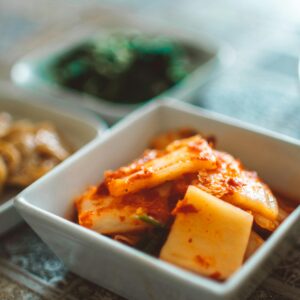
After making more batches than I can count (and messing up a fair number), I’ve realized something important there’s no single “perfect” recipe.
Instead, it’s about understanding balance. Feeling it. Adjusting as you go.
Kimchi isn’t rigid. It’s flexible. Like it expects you to make it your own.
Balance of Spice, Sour, and Umami
My first attempt? I went all in on chili.
Big mistake.
I thought more spice meant more flavor. What I got instead was something that basically shouted at my taste buds and refused to listen back.
Lesson learned.
Good kimchi isn’t about one flavor dominating. It’s about harmony.
When a batch turns out right, I notice three key elements working together:
- Spice that warms, not overwhelms
- Sourness that builds धीरे, sneaking in over time
- Umami that sits quietly underneath, holding everything together
If one goes off balance, the whole thing feels… wrong.
Here’s how I break it down in my head:
| Element | What I Look For | What Happens If It’s Off |
|---|---|---|
| Spice | Gentle heat that lingers | Takes over everything |
| Sourness | Slow, developing tang | Feels flat or too aggressive |
| Umami | Deep, savory backbone | Tastes empty, forgettable |
When all three align, something magical happens. Not loud magic. Not flashy. Just that quiet, satisfying kind that makes you keep eating without thinking twice.
Suddenly, the jar is half empty. And you’re standing there wondering how that happened.
Importance of Fermentation
If there’s one thing kimchi has taught me, it’s patience.
And I’ll admit I’m not naturally patient.
I’ve tried rushing it. Moving jars around. Checking too often. Tasting too early. Hoping, somehow, I could speed things up.
Didn’t work.
Fermentation doesn’t care about my schedule. It moves at its own pace. Slow. Steady. Unbothered.
This is where the real transformation happens. Natural bacteria get to work, breaking things down, creating that signature tang and depth.
It’s quiet work. Invisible, almost. But powerful.
Usually, I leave my kimchi out for a day or two, then move it to the fridge. After that, I check it occasionally not obsessively like before but enough to catch that sweet spot.
There’s always a moment when everything clicks.
The flavors stop feeling separate. They blend. They settle. They make sense.
That’s when I know it’s ready.
And yes, sometimes it bubbles. Sometimes the smell gets stronger than expected.
I used to panic. Now I don’t.
That’s just the process doing its thing.
Fresh vs Aged Kimchi Differences
This part took time for me to appreciate.
At first, I only liked fresh kimchi. It’s crunchy. Bright. A little playful. Easy to enjoy.
Aged kimchi? That felt intense. Almost too much.
But something changed.
The more I made it, the more I started to understand it. And now? I actually look forward to that deep, aged flavor.
As kimchi matures, everything shifts. The sourness deepens. The texture softens. The flavors blend into something richer, more complex.
Here’s how I see it now:
| Type | What It Feels Like to Me | When I Crave It |
|---|---|---|
| Fresh Kimchi | Crisp, lively, slightly sharp | Quick meals, light dishes |
| Aged Kimchi | Deep, sour, rich, comforting | Stews, fried rice, cold days |
Funny thing is, I used to avoid aged kimchi completely.
Now? I sometimes make extra just to let it sit longer. Waiting for that deeper, bolder version to emerge.
Taste changes. Slowly. Quietly. Just like the kimchi itself.
III. Key Ingredients for a Traditional Kimchi Recipe
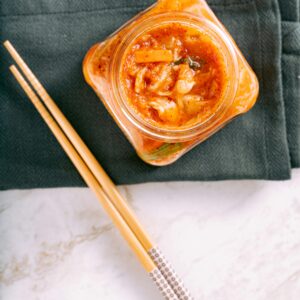
I’ll admit it I once brushed kimchi off as nothing more than spicy cabbage stuffed into a jar. That thought didn’t survive my first real attempt. The moment I got my hands into the process, everything shifted. The sharp smell of garlic clung to my fingers, the cabbage leaves softened under salt like they were surrendering, and the whole kitchen started to feel alive. Not dramatic just… awake.
That’s when I realized something simple but powerful: this isn’t just cooking. It’s transformation. Slow, steady, and a little unpredictable like trying to grow something in a jar and hoping it listens.
Every ingredient matters. Skip one, and the whole thing feels off. Like music without rhythm. Or tea without sugar technically fine, but something’s missing.
Main Vegetable Choices (Like Napa Cabbage)
The first time I held napa cabbage, I didn’t exactly feel inspired. It looked bulky, pale, almost tired. Like it had been sitting around thinking about life too much. But once I started working with it cutting, salting, rinsing it changed in front of me.
The leaves softened but didn’t collapse. They bent easily, almost silky, yet held onto a gentle crunch. It was like they were built for this exact purpose to carry flavor without falling apart.
That’s when it clicked. Napa cabbage isn’t just an ingredient. It’s the base. The quiet backbone holding everything together.
Still, I don’t always stick to tradition.
Some days, I switch things up depending on what’s in my kitchen or what mood I’m in:
- Radish brings a sharp, peppery crunch. It doesn’t whisper. It speaks loudly.
- Cucumber feels cool and refreshing, especially when the weather refuses to cooperate.
- Green onions slip in gently, adding bite without stealing the spotlight.
Each one changes the character of the kimchi. Napa cabbage feels deep and grounding. Radish feels bold and slightly rebellious. Cucumber? Light, playful, almost carefree.
And honestly, sometimes I just use what I didn’t forget to buy. Let’s be real.
Essential Seasonings (Garlic, Ginger, Chili Flakes)
This is where things wake up.
I still remember crushing garlic for the first time. The smell hit instantly sharp, loud, impossible to ignore. It didn’t ask for attention. It demanded it. Then came the ginger, warm and slightly sweet, like it was trying to calm things down after garlic’s dramatic entrance.
And then the chili flakes.
That deep red color isn’t just decoration. It’s personality. Heat, yes. But also a slow-building warmth that lingers. The first time I mixed everything into a paste, I paused. It looked intense. Smelled even stronger. I genuinely wondered if I had just made something brilliant or completely inedible.
Spoiler: it worked.
Here’s how I see these essentials now:
| Ingredient | What It Brings to the Table |
|---|---|
| Garlic | Bold depth that defines the flavor |
| Ginger | Warmth and balance that smooths things out |
| Chili flakes | Heat, color, and that unmistakable kick |
Of course, I’ve had my share of mistakes. One time I added too many chili flakes and nearly questioned my life choices after the first bite. It wasn’t just spicy it felt personal. Like the kimchi had a grudge.
Lesson learned. Balance isn’t optional.
Role of Fermented Seafood or Alternatives
I hesitated here. A lot.
Fermented seafood didn’t sound appealing at first. If anything, it sounded like something I’d politely avoid at a dinner table. I almost skipped it entirely.
But curiosity has a way of pushing you forward.
The first time I added fish sauce, nothing dramatic happened right away. But as the kimchi sat and fermented, something deeper developed. The flavor grew richer, more layered like there was a quiet story unfolding underneath everything else.
That’s when I understood it’s not about tasting seafood. It’s about depth. About building something that feels complete.
Still, I don’t always use it.
Some days, I go for simpler options:
- Soy sauce for a cleaner, lighter taste
- Miso for a gentle, rounded richness
And it still works. It still feels like kimchi just wearing a slightly different outfit. That flexibility? I’ve come to appreciate it more than I expected.
Choosing Quality Ingredients for Best Flavor
I learned this the hard way. Of course I did.
There was a time I rushed through everything. Grabbed whatever was lying around. The cabbage was limp. The garlic barely had a smell. The chili flakes looked dull. I told myself it wouldn’t matter.
It mattered.
The final result tasted… flat. Lifeless. Like it had given up halfway through. I didn’t even want to eat it. That jar sat there, quietly judging me.
Now, I pay attention.
When I shop, I look for:
- Crisp cabbage with firm, fresh leaves
- Garlic that hits your nose the second you peel it
- Ginger that feels juicy, not dry
- Chili flakes that are bright red not faded and tired
Good ingredients don’t just improve the taste they change the whole experience. Everything feels smoother, easier, almost natural. Like starting a journey on the right foot instead of tripping at the door.
IV. Types of Kimchi Recipes
At some point, I realized kimchi isn’t just one thing. It’s a whole universe. Different textures, different flavors, different personalities.
Trying new types felt like meeting the same story told in different voices.
Baechu Kimchi (Classic Cabbage Kimchi)
This is where I always return.
My first successful batch was baechu kimchi, and I still remember opening the jar after a few days. The smell hit me first sharp, tangy, a little funky. I hesitated. Just for a second.
Then I took a bite.
Crunchy. Spicy. Slightly sour. Alive.
It wasn’t perfect, but it was real. And somehow, that made it better.
Baechu kimchi feels balanced. Rich but not overwhelming. It works with almost anything. For me, it’s comfort food with a bit of attitude.
Kkakdugi (Cubed Radish Kimchi)
The first time I made this, I noticed the difference immediately.
No soft leaves. No folding layers. Just cubes of radish firm, confident, almost staring back at me like, “Let’s see what you’ve got.”
I chopped, mixed, and waited. When I finally tasted it, the crunch surprised me. It wasn’t subtle. It snapped. Loud and clean, followed by a burst of spice.
It also ferments faster, which is perfect when patience runs thin. And trust me, some days it really does.
Oi Sobagi (Fresh Cucumber Kimchi)
I made this on a hot afternoon when even standing in the kitchen felt like a bad decision.
Cucumbers are naturally refreshing, but stuffing them with spicy filling? That contrast caught me off guard. Cool and crisp on the outside, bold and flavorful on the inside.
The best part it’s quick. No long wait. I can make it and eat it almost right away.
This is the kimchi I turn to when I want something light. Something that doesn’t weigh me down but still delivers.
Baek Kimchi (Non-Spicy Variation)
I didn’t expect to like this one.
No chili flakes. No heat. Just simple, clean flavors. I thought it might be bland. Forgettable.
It wasn’t.
The taste was subtle but refreshing. A gentle tang that didn’t overwhelm. It felt calm like a quiet moment in the middle of everything else.
Now, I make it when I need a break from spice. Or when I’m sharing with someone who isn’t ready for that fiery kick.
It’s proof that kimchi doesn’t need heat to have soul.
My Kimchi Routine and What Fermentation Quietly Taught Me
I didn’t grow up thinking I’d ever spend time rubbing salt into cabbage like it owed me rent. Yet here I am, standing in my kitchen with red-stained hands, wondering how a simple vegetable turned my life into this slightly messy, slightly addictive routine.
Kimchi didn’t enter my life with drama. It just showed up as curiosity. One day I tried it. Then I tried making it. Then I made it again because the first batch was… let’s call it “learning material.”
Now it’s a habit. Not a polished one. More like a loud kitchen moment that always ends with a jar quietly doing its own thing on a shelf.
Let me walk you through how I actually make it. Not the perfect version. The real one.
V. My Step-by-Step Kimchi Process
1. Prepping and salting the cabbage
The first time I worked with napa cabbage, I thought it would be simple. Cut, salt, wait. Easy.
It wasn’t.
I start by slicing the cabbage into big chunks. Not perfect cuts. I’m not trying to impress anyone here. Then I rinse it well because I once skipped that step and ended up questioning my life choices halfway through fermentation.
After that comes salt.
And this is where people usually expect precision. I don’t have much of that energy. I go layer by layer, sprinkling salt between leaves like I’m tucking the cabbage into bed. A very salty bed, but still.
Then I wait.
And waiting is where things get interesting.
At first, nothing happens. The cabbage just sits there, looking innocent. Then slowly, water starts pulling out. Like the cabbage is sighing and letting go of everything it’s been holding.
I still find that part strange in a good way. It feels like watching something change without asking for permission.
And honestly, that’s the first moment I realize this process has its own personality.
2. Making the paste (the loud part of my kitchen)
This stage always turns my kitchen into a kind of battlefield between garlic and chili.
I don’t follow a strict formula. I just start adding things into a bowl garlic, ginger, chili flakes, maybe a bit of sweetness to soften the edge. Nothing fancy. Just instinct.
It starts off looking harmless. Then I mix it.
And suddenly it becomes a thick, red, intense paste that looks like it has opinions.
Every single time, I think the same thing: this is too strong. And every single time, it turns out fine.
The smell hits first. Sharp garlic. Warm spice. A little chaos in the air. My eyes sometimes start reacting before I even understand what’s happening.
I once tried talking while mixing this paste. Bad idea. It’s not a “conversation-friendly” moment.
But I keep going anyway. Because this messy bowl is where everything begins to feel real.
3. Mixing everything together (the messy truth)
This is the part where I stop pretending I care about staying clean.
I take the salted cabbage and start rubbing the paste into it with my hands. Gloves? Sometimes. But honestly, I prefer using my hands. It feels more honest, even if I regret it later when I forget and touch my face.
I go leaf by leaf, spreading the paste carefully. Not rushed. Not lazy. Just steady.
If I rush this part, I pay for it later. Some pieces turn bland. Some turn too strong. Kimchi remembers everything.
And yes, it gets messy. Very messy.
My hands turn red. My sink looks dramatic. My countertop looks like something intense just happened and in a way, it did.
There’s always a point where I stop thinking about “steps” and just focus on making sure every piece is coated properly. That’s usually when I know I’m doing it right.
Funny how the best part of cooking often looks the least organized.
4. Packing it away (the quiet moment)
After all that noise, things suddenly slow down.
I pack everything into a jar. I press it down gently. Not aggressively. Just enough to remove air pockets. I learned the hard way that trapped air is not your friend here.
The jar fills slowly. Layer by layer. It feels almost like closing a chapter.
I always leave a small gap at the top. Not because I read it somewhere every time, but because I’ve made mistakes before. And kimchi has a way of teaching lessons that stick.
Then I close the lid.
And just like that, my job is done.
Or at least, that’s what it looks like.
In reality, the real work has just started.
VI. What Fermentation Really Means to Me
1. My simple understanding of fermentation
The first time someone told me bacteria were “working” inside my food, I paused for a second.
It sounded a bit strange. Invisible life doing chores in my jar? Not exactly comforting at first.
But over time, I started seeing it differently.
Now I think of fermentation as something slow and steady. Not something I control, but something I guide and then step back from.
Sugar changes. Flavors deepen. Sharpness builds.
I don’t see it happening. But I feel it when I open the jar days later.
It’s no longer the same cabbage I packed. It becomes something else. Something with attitude.
Not alive in a dramatic way. Just quietly active. Like it never really stops becoming something new.
2. Temperature (the silent boss)
I used to ignore temperature. I thought it wouldn’t matter much.
It matters a lot.
Warm place? Everything speeds up. Sometimes too fast. The flavor jumps ahead before I’m ready.
Cool place? Everything slows down. It behaves. It develops patience.
Now I try to keep it balanced. Not too warm, not too cold. Just steady.
And I check it often. Not because I’m nervous. More because I’m curious.
Every day it changes a little. That part still surprises me, even after many batches.
3. How I know it’s ready
I don’t trust clocks for this. I trust senses.
First, I look at it. Tiny bubbles sometimes appear. That usually means something good is happening.
Then I smell it. Sharp, but not unpleasant. If it smells wrong, I don’t ignore it. Experience taught me that lesson once and I don’t want a repeat performance.
Then I taste it.
And that’s the moment everything clicks.
If it’s sour, spicy, and deep in flavor but still balanced I know it’s ready.
Not perfect. Just right for that moment.
Because here’s the thing nobody tells you clearly: kimchi doesn’t stay fixed. Even after you say “done,” it keeps changing.
4. Mistakes I’ve made (so you don’t have to)
I’ve made enough mistakes to recognize patterns.
- Too much salt early on
Everything turns sharp and unpleasant. - Loose packing in jars
Air gets in. Things go off faster than expected. - Ignoring temperature
I once left a batch too warm and came back to something I can only describe as “too excited.” - Forgetting about it completely
Kimchi is not decor. It needs attention sometimes. - Never tasting during fermentation
This is a big one. Timing is not fixed. It shifts.
Each mistake taught me something I didn’t know I needed.
VII. Easy Kimchi Recipe for Beginners
I still remember the first time I tried making kimchi. On paper, it looked harmless. Just cabbage, spices, a jar. Easy, right?
Then reality walked into my kitchen like it owned the place.
The cabbage was everywhere. My hands were red. The air had that sharp garlic smell that makes you question your life choices. And yet… I kept going. Because kimchi, even in its simplest form, has this strange pull. It looks calm in theory, but it moves like a living thing once you start.
Over time, I learned something important. The beginner version of kimchi is not meant to scare you. It is meant to teach you.
My simplified ingredient list (what I actually use first)
When I first started, I stopped trying to be perfect. I cut everything down to the basics. No stress. No fancy hunting in stores.
Here is what I stick to when I want a clean start:
- Napa cabbage
- Salt
- Garlic
- Ginger
- Korean red chili flakes (gochugaru)
- A little sugar
- Water
- Green onions
That’s it. Nothing extra trying to impress anyone. Just simple things that still know how to create bold flavor when they work together.
I like to think of it as a small band. No extra instruments. Just enough sound to make music.
How I actually make it (slow and simple, no panic)
I never rush kimchi anymore. The moment I rushed it, it got messy. So now I treat it like a slow conversation.
First, I cut the cabbage and soak it in salted water. At the beginning, it feels stiff, almost stubborn. Like it does not want to change. But give it time, and it softens. It’s kind of funny watching it give up its pride leaf by leaf.
Then I rinse it well. This part matters more than I used to think. If I leave too much salt, the whole thing turns aggressive later. And not in a good way.
After that, I make the paste. Garlic, ginger, chili flakes, sugar, and water. I mix it until it turns into a thick red paste. The color always surprises me. It looks like it has attitude. Like it’s ready to argue with your taste buds.
Then comes the fun part.
I coat every piece of cabbage with that paste. I use my hands. Gloves sometimes, but honestly, gloves make me feel too distant from the process. I want to feel it. Even if it stains my fingers for a day or two. That’s part of the deal.
Everything gets packed tightly into a jar. I press it down like I’m tucking it in for a long sleep.
Then I leave it at room temperature for about one to two days.
And this is where it starts acting alive.
Tiny bubbles appear. The smell changes. The jar becomes slightly louder in a way you cannot hear but can feel. That’s fermentation doing its quiet work.
After that, I move it to the fridge. That slows everything down, like pressing pause on something that wants to keep growing.
What I learned the hard way (so you don’t have to)
My first batch of kimchi was not good. Not terrible… but definitely confused. It didn’t know what it wanted to be.
Here’s what I wish someone had told me:
- Start small. A huge batch only increases your stress level
- The smell changes. Don’t panic. It’s not spoiled, it’s transforming
- Keep the seasoning simple at first
- Don’t chase perfection. Chase balance
- Time matters more than effort
I used to think I had to “master” kimchi in one go. That’s nonsense. Kimchi doesn’t reward pressure. It rewards patience.
Now I treat every batch like a draft. Some come out sharp, some mellow, some surprise me completely. That’s part of the fun.
And yes, sometimes I still open the jar too early. Just to “check.” As if it will magically finish faster because I looked at it.
It never does.
VIII. Vegan and Gluten-Free Kimchi Options
At some point, I started making kimchi for friends with different diets. That’s when I realized something important. Kimchi is flexible. More than I ever expected.
It doesn’t lose its soul when you change ingredients. It just changes its accent.
Swapping out fish sauce and shrimp paste
Traditional kimchi often leans on fish sauce or shrimp paste for depth. I used to think that was non-negotiable.
Turns out, it is very negotiable.
When I started going vegan-friendly, I tested a few replacements:
- Soy sauce or gluten-free tamari instead of fish sauce
- Miso paste for deep fermented flavor
- Mushroom broth for earthy richness
- Seaweed like kombu or nori for that subtle ocean note
Each one feels different. Miso gives warmth. Mushrooms feel grounded. Seaweed adds a quiet background depth that sneaks up on you.
I won’t lie. The first time I made vegan kimchi, I expected it to taste like a “lesser version.” It didn’t.
It just tasted… different. Still bold. Still alive.
How I keep flavor strong without animal products
This part took me some trial and error. Vegan kimchi can fall flat if you try to replace everything with just one ingredient. I learned that the hard way after one very boring batch that tasted like spicy cabbage sadness.
Now I follow a few simple habits:
- I layer flavors instead of relying on one strong base
- I let fermentation do most of the heavy lifting
- I keep chili flakes as the main voice in the mix
- I sometimes add fruit like pear or apple for gentle sweetness
- I focus on balance, not imitation
That last point changed everything for me.
I stopped trying to “copy” traditional kimchi. Instead, I focused on building something that still hits the same emotional spot spicy, tangy, salty, and slightly wild.
What vegan kimchi feels like after fermenting
Fresh vegan kimchi can feel a bit softer at first. Less punchy. More polite.
But give it time, and it wakes up.
After a few days in the fridge, it starts developing personality. The flavors deepen. The sharp edges smooth out. It stops feeling like a substitute and starts feeling like its own thing.
Sometimes I open a jar late at night, stand there in the kitchen, and think, “Yeah… this works.”
Then I eat too much of it and pretend I regret nothing.
IX. Health Benefits of Kimchi
I didn’t grow up thinking fermented food mattered. Honestly, it just wasn’t on my radar. Food was food. You ate it, you moved on.
The first time I met kimchi properly, I wasn’t impressed. It sat in a small dish next to rice like it owned the place. I remember looking at it and thinking, “Okay… what’s the big deal here?”
Then I tried it.
Sharp hit first. Spicy right after. A sour note that didn’t ask permission it just arrived. I even paused mid-bite like my mouth needed time to process what just happened.
But here’s the strange part. I didn’t fall in love with it instantly. That would be too neat. Instead, something slower happened. I kept going back to it. Not because I was trying to be “healthy” or follow trends, but because my body started reacting in a way I couldn’t ignore.
And that’s when things got interesting.
Rich in probiotics
I used to hear the word “probiotics” and think it sounded like something from a health ad. Big claims. Small meaning. At least that’s what I thought.
Then I started paying attention.
Kimchi isn’t just food sitting quietly on a plate. It’s alive in its own slow way. It ferments. It shifts. It changes over time like it has its own rhythm. During that process, good bacteria grow inside it.
At first, nothing dramatic happened. I just ate it with rice, grilled meat, simple meals. It tasted bold, so I kept it around.
But after a while, I noticed something small. My stomach didn’t feel as heavy after eating. That uncomfortable “why did I eat so much” feeling showed up less often.
No fireworks. No magic moment. Just a quiet improvement that sneaks in like it’s been there all along.
Supports digestion and gut health
Digestion is one of those things you don’t think about… until it complains.
I’ve had meals where everything felt stuck afterward. Heavy. Slow. Like my stomach was holding a meeting and forgot to invite movement.
When kimchi started showing up regularly on my plate, especially with oily or heavy food, something changed.
Not overnight. Not dramatically. But steadily.
Food felt easier to handle. Less pressure after eating. More comfort in my body instead of that sluggish “I need to lie down and rethink my life” feeling.
It didn’t “fix” everything. Let’s be real food doesn’t work like a superhero story. But it felt like it supported the process. Like giving your stomach a helpful teammate instead of sending it into battle alone.
Sometimes I’d finish a meal and think, “Huh… that went smoother than usual.” That’s it. Simple. Quiet. Noticeable.
Packed with vitamins and antioxidants
Kimchi looks simple at first glance. Cabbage. Chili. Garlic. Salt. That’s the surface level.
But underneath that, it’s doing more than it looks like it should.
There’s vitamin A. Vitamin B. Vitamin C. Plus antioxidants working in the background like quiet workers in a kitchen after closing time.
I didn’t care about any of that when I started eating it. Nobody does. You don’t sit down and say, “Ah yes, I’m here for the nutrients.” You eat it because it’s bold. It wakes up your taste buds. It makes plain rice feel like it has a personality.
But later, when you realize it also supports your body in a deeper way, something shifts in how you see it.
It stops being just a side dish.
It becomes one of those foods that feels like it’s doing more than it’s asking for credit for.
And I’ll be honest those are the best kinds of foods. The ones that don’t lecture you while quietly helping you out.
X. How to Store Kimchi Properly
If eating kimchi is easy, storing it is where things get real.
I learned that the hard way.
I once opened a fresh batch, left it out, and thought, “It’ll be fine for a bit.” That was my mistake. Kimchi doesn’t “wait.” It moves forward whether you’re ready or not.
It’s alive in a quiet, stubborn way.
Refrigeration vs room temperature
Early on, I treated kimchi like regular pickles. Big mistake. Very big.
At room temperature, it doesn’t just sit there. It speeds up. Fermentation kicks in fast. The flavor gets stronger, sharper, more sour in a short time.
That can be good… if you like intensity. But it can also run away from you like a pot boiling over when you look away for one second.
The fridge is the real control point.
Once kimchi goes cold, everything slows down. It still changes, but gently. The flavors deepen instead of rushing forward. It matures instead of exploding.
Now I think of it like this:
- Room temperature: fast change, bold flavor shifts, slightly unpredictable
- Refrigerator: slow growth, stable taste, more control
I’ve learned not to trust kimchi sitting on a counter for too long. It doesn’t forget.
It evolves.
Sometimes faster than you want.
Shelf life and flavor changes over time
Kimchi doesn’t really “expire” in the normal sense. It transforms.
Fresh kimchi is my favorite for eating straight. It’s crisp. Bright. Loud in flavor. I’ll eat it with rice and simple meals when I want something sharp and refreshing.
After a couple of weeks, it changes. The sourness grows. The texture softens a bit. That’s when I start cooking with it.
Fried rice. Stews. Noodles. Suddenly it’s not just a side dish anymore it becomes part of the main story.
Give it more time, and it turns deeply sour. Almost aggressive in flavor. But even then, it’s not useless. Heat brings it back into balance. Cooking smooths it out, makes it rich and layered.
I’ve opened old jars before and stood there thinking, “This might be too far gone.”
Then I cook it anyway.
And more times than I can count, it surprises me.
Kimchi has a habit of proving you wrong when you think you’ve figured it out.
Best containers to use
This part sounds boring until you mess it up once.
I used to store kimchi in whatever container was available. Plastic box. Random lid. No planning. Just vibes.
Bad idea.
The smell spread. Not politely. Not quietly. It spread like it owned the kitchen.
Now I keep it simple and strict.
Best options:
- Glass jars with tight lids – clean, sealed, no lingering smell
- Dedicated fermentation containers – built to handle pressure and gas
- Avoid loose plastic containers – they leak smell and don’t control fermentation well
One thing I also learned the hard way: don’t fill the container to the top.
Kimchi releases gas as it ferments. It needs space. Without it, pressure builds. And trust me, opening an overpacked jar is not a peaceful experience. It’s more like a surprise event you didn’t ask to attend.
Now I leave space at the top like I’m giving it room to breathe. Because honestly, that’s exactly what it needs.
XI. Popular Dishes Using Kimchi
I didn’t really get kimchi at first.
It sat in my fridge like that one guest who doesn’t talk much at a party but somehow makes the room feel different. Small bowl. Sharp smell. A bit intense. Honestly, I kept it at arm’s length for a while.
Then one evening, I was tired, hungry, and not in the mood to “cook properly.” I tossed it into a hot pan of rice just to see what would happen.
That’s where things flipped.
The kitchen didn’t stay calm anymore. It crackled. It sizzled. It smelled loud. And suddenly, kimchi wasn’t just sitting on the side of the plate it was running the show.
That was the moment I understood something simple: kimchi doesn’t behave like a side dish. It takes over. In a good way.
Kimchi Fried Rice
This one is my emergency button.
No plan. No patience. Just hunger.
I grab leftover rice, a spoon of kimchi, and a bit of oil. That’s it. The moment it hits the pan, it reacts like it’s been waiting its whole life for this exact moment. Loud sizzling. Fast movement. No mercy.
The rice slowly turns this deep red-orange color, a little smoky, a little sticky. It smells like something between comfort food and “I should’ve made more.”
And I always crack an egg on top. Not because it’s necessary. But because the egg makes everything feel like it has its life together even when I clearly don’t.
It’s messy. It’s fast. It tastes like forgiveness.
Like the kitchen is saying, “It’s fine. You tried.”
Kimchi Stew
This one slows everything down.
When I make kimchi stew, I feel like the whole kitchen changes mood. It stops rushing. It starts breathing.
The kimchi softens in the pot, breaking down into the broth like it’s been waiting for this transformation. It doesn’t feel like leftovers anymore. It feels like something deeper. Something that took its time on purpose.
Sometimes I add tofu. Sometimes pork. Sometimes I just look in the fridge and pick whatever looks less lonely.
There’s no strict rule here. Just instinct.
And the smell… it spreads everywhere. Not politely either. It takes over the room like it owns the place and isn’t asking for permission.
I always tell myself I’ll eat a small bowl.
I never do.
Somehow, it always becomes two.
Kimchi Pancakes
These are my “I need something crispy right now” situation.
I mix chopped kimchi with flour and water. It doesn’t look impressive at this stage. Honestly, it looks a bit suspicious. Like it shouldn’t work.
But then it hits the pan.
And everything changes.
It starts crackling immediately. Like the batter is arguing with the heat. The edges turn golden and crispy. The inside stays soft with that sharp, tangy bite from the kimchi.
The first pancake usually burns a little. That’s just tradition at this point. I flip it too early, panic, then accept my fate.
And still eat it anyway.
Because let’s be honest no one waits for perfection when something smells this good.
They disappear fast too. One moment they’re there. Next moment, they’re gone. Like they had places to be.
XII. Tips for Customizing Your Kimchi Recipe
At first, I thought kimchi was fixed.
Like there was a rulebook somewhere and I just hadn’t read it yet.
Turns out… there isn’t.
It’s more like a living thing that changes depending on who’s making it. And honestly, that’s where it gets fun.
Adjusting Spice Levels
I learned this the hard way after making a batch that felt like it was personally offended by me.
One bite in, and I knew I had messed up.
Now I adjust it properly.
Less chili flakes gives a softer, calmer taste. Something you can actually talk through without sweating through your thoughts. More chili turns it into something bold sharp, loud, almost dramatic.
Some days I split it. Half mild, half spicy. Like two moods living in the same jar. It sounds chaotic, but it works.
Food should match the day you’re having. Not the other way around.
Adding Fruits or Extra Vegetables
This part surprised me the most.
The first time I added pear, I didn’t expect much. I thought it would be a small detail, nothing important.
But it changed everything.
The sharp edges softened. The flavor felt rounder, smoother, like it took a deep breath.
After that, I started experimenting more.
Apple adds a light sweetness. Carrot brings crunch and structure. Radish gives bite and attitude. Even cucumber in fresh versions cools everything down like a quiet breeze sliding through a hot room.
It stops being “just kimchi” and starts feeling personal. Like it has your fingerprints on it.
Creating Your Own Signature Flavor
At some point, I stopped following rules strictly.
I started tasting as I went. A bit more garlic when I wanted depth. Less salt when it felt heavy. Longer fermentation when I had patience. Shorter when I didn’t.
It’s not precise. It’s not neat. It’s a little messy, honestly.
But it feels right.
Every batch ends up slightly different. Some are strong and loud. Some are soft and quiet. Some I love immediately. Some grow on me later.
And even the imperfect ones don’t go to waste. They always end up in fried rice or stew later anyway. Nothing really gets lost.
That’s the funny part about kimchi it doesn’t punish mistakes. It just transforms them.
XIII. Common Kimchi Recipe Mistakes (From My Own Kitchen Chaos)
I didn’t exactly “learn” kimchi from a perfect guide or some polished kitchen wisdom. I learned it the messy way. The real way. The way where your fridge becomes a quiet witness to your confidence crashing and rebuilding itself again and again.
Some jars came out alive and sharp, like they had something to say. Others? Let’s just say I avoided eye contact with them every time I opened the fridge. Not every experiment deserves a second chance.
But every mistake taught me something I couldn’t unlearn.
Over-salting or under-salting
The first time I got salt wrong, I thought I was being clever.
I poured it in like I was painting something bold. I believed more salt meant more flavor. Simple math, right? Wrong.
What I got instead was cabbage that tasted like it had been dunked in the ocean and left there to rethink its life choices. It was stiff, aggressive, and honestly a bit rude on the tongue.
Then I swung too far the other way.
Barely any salt at all. I thought I was being “gentle” with it. That batch didn’t ferment properly it just kind of… gave up. It turned soft too quickly, like it lost interest in becoming kimchi halfway through. The smell wasn’t even confident. It was confused. And so was I.
That’s when it clicked for me. Salt isn’t just seasoning. It’s control. It decides the pace of everything.
Now I treat salt like something that needs respect.
Not too much. Not too little. Just enough to hold the whole thing together without strangling it.
- Too much salt → harsh, stiff, almost angry kimchi
- Too little salt → weak structure, fast spoilage, no backbone
I stopped guessing. I started measuring properly. Because salt remembers what you do to it.
Poor fermentation conditions
I once left a fresh batch on the kitchen counter during a hot week.
I told myself, “It’ll be fine.”
That was my first mistake.
Within a couple of days, I could tell something had gone wrong just by walking into the kitchen. The smell didn’t greet me it warned me. It was too fast, too loud, too chaotic. Like everything had fermented in a rush with no direction.
Heat doesn’t just speed things up. It pushes them out of control.
Another time, I went the opposite direction. I tucked a jar into a cold corner of the fridge and basically forgot about it. Days passed. Nothing happened. It was like the fermentation process had gone on strike.
That’s when I realized something simple but important: kimchi reacts to its environment like it’s alive.
Temperature isn’t a setting. It’s a conversation.
- Too warm → messy, rushed fermentation
- Too cold → almost nothing happens
- Just right → slow, steady transformation that actually makes sense
Now I don’t fight the process. I just guide it. Like steering instead of pushing.
And honestly, kimchi behaves better when you stop trying to boss it around.
Using the wrong type of cabbage
This one fooled me because it looked harmless.
I picked up a soft cabbage once at the market. It looked fresh enough. Green. Clean. Innocent. I didn’t think too deeply about it. I assumed cabbage is cabbage.
It isn’t.
After fermenting, that batch collapsed on itself. No crunch. No structure. Just soft, sad leaves floating in a jar like they had given up on everything. It didn’t feel like kimchi. It felt like regret in liquid form.
That experience stuck with me.
Later, I tried a firmer cabbage. The difference was immediate. Even after fermentation, it held its shape. It had bite. It had presence. It felt like it could survive something.
That’s when I understood: cabbage isn’t just an ingredient. It’s the frame.
- Soft cabbage → mushy, weak, disappointing texture
- Firm cabbage → structure, crunch, real identity
Now I don’t compromise on it. If the cabbage isn’t right, I don’t even start. No negotiation. No second guessing.
Because if the base is weak, everything else falls apart with it.
XIV. Frequently Asked Questions (FAQs)
How long does kimchi last?
This question used to make me overthink everything.
Now it just makes me smile a little.
Kimchi doesn’t really “expire” the way people expect food to. It changes. It evolves. It moves through phases like it has moods of its own.
In my fridge, I’ve watched it shift like this:
- Early stage → crisp, bright, almost playful
- Mid stage → deeper flavor, stronger personality, more serious
- Late stage → bold, sour, intense enough to surprise you if you’re not ready
I’ve kept jars for weeks without worrying too much. Sometimes longer.
I stopped relying on dates printed on containers. They don’t understand kimchi the way your taste buds do. One small bite tells you everything you need to know.
Can kimchi go bad?
Yes. And I learned that the hard way.
There’s a difference between well-aged kimchi and this should not be eaten. And once you’ve crossed that line, you don’t need a second opinion. Your nose settles the argument immediately.
I once opened a jar that felt wrong before I even fully unscrewed the lid. The smell wasn’t just sour. It was heavy. Off. Like something had gone past its natural limit and decided to stay there anyway.
I didn’t debate it. I closed it. I threw it away. End of story.
Now I watch for clear warning signs:
- Unusual mold that doesn’t belong
- Slimy texture that feels unnatural
- Smell that goes beyond sour into something unsettling
When it feels suspicious, I don’t “test it again.” I just let it go.
Some things don’t need a second opinion.
Why is my kimchi too sour or too salty?
I’ve asked this question more times than I care to admit, usually standing in front of the fridge like it might answer me back.
It never does. But I’ve learned to read the signs anyway.
When it turns too sour, I know I left it too long or too warm. It fermented faster than I planned, like it got impatient with me.
When it turns too salty, I know the mistake happened early. That one doesn’t fade. It just stays there, louder with every bite, refusing to be ignored.
So I changed how I approach it:
- I shorten fermentation when I want mild flavor
- I control temperature more carefully instead of hoping for the best
- I taste earlier instead of waiting blindly
Kimchi taught me something I didn’t expect: you don’t fix mistakes at the end. You prevent them at the beginning.
That lesson shows up in more than just cooking, honestly.
XV. Conclusion
I still remember the first time I stood in my kitchen, just staring at a bowl of chopped cabbage like it owed me answers.
I thought, “So this is it? This is kimchi?”
No drama. No sparkle. No big moment where the lights change and music starts playing in the background. Just cabbage, salt, and silence doing their slow, invisible work.
At that point, I honestly didn’t get it. It looked too ordinary for something people talk about with so much respect. Like everyone else was in on a secret I hadn’t cracked yet.
But kimchi has a strange way of proving you wrong. Not quickly. Not loudly. It takes its time, like it’s patient on purpose.
Kimchi has taught me patience in a very real way. Not the romantic kind of patience. The messy, slightly smelly, hands-on kind.
Whether it’s beginner kimchi or vegan kimchi, the rule stays the same in my kitchen:
You don’t control it fully. You guide it. Then you wait.
And somewhere between salt, spice, and time, it becomes something better than what you started with.
Every time I make kimchi, I realize something simple.
It’s not really about following steps perfectly. It’s about paying attention.
It’s cabbage, salt, spice, and time. Nothing complicated on paper. But in reality, it behaves like something with its own rhythm.
I just start the process. That’s it. The rest unfolds on its own.
And when I finally open that jar days later, it doesn’t feel like I created something from scratch.
It feels more like I set something in motion… and then stepped aside to watch it become itself.
Making kimchi has changed the way I see food.
It’s no longer just about cooking. It’s about timing. Patience. Trust.
Each jar teaches me something new. Sometimes it’s about balance. Sometimes it’s about letting go and not interfering too much.
And sometimes, it’s just about that simple moment opening the lid, taking a bite, and pausing.
Because right there, in that mix of spice, sour, and depth, there’s a quiet little victory.
And I always think the same thing
Yeah… this was worth the wait.
Kimchi taught me something I didn’t expect from food.
Nothing stays the same.
Not even a simple jar of cabbage.
It changes depending on time, temperature, and patience. Some days it’s crisp and sharp. Other days it’s deep and sour. Sometimes it feels fresh and light. Sometimes it feels intense and heavy.
And strangely enough, all versions make sense.
The health benefits are real better digestion, probiotics, vitamins but what stayed with me wasn’t just that. It was the way it behaves over time. It doesn’t sit still. It doesn’t pretend to be one thing forever.
It teaches you timing without saying a word.
Eat it fresh when it’s bright. Wait when it needs time. Cook it when it gets strong.
Simple rules. No drama.
I didn’t expect a jar of fermented cabbage to teach me patience.
But here we are.
Cooking with kimchi never feels boring.
One day it’s fried rice in five minutes. The next it’s a stew that slowly warms the whole room. Sometimes it’s pancakes that disappear before they even cool down enough to touch properly.
It keeps changing shape in my kitchen, and somehow I keep letting it.
Because it’s not quiet food. It never sits still. It doesn’t wait politely in the background.
It’s loud. It’s sharp. It’s unpredictable.
And yeah, sometimes it feels like that one friend who shows up uninvited, opens your fridge without asking, and somehow ends up making the night better anyway.
I used to think kimchi was just cabbage sitting in a jar, quietly doing its thing.
Now I see it differently.
It feels more like a long, slow conversation between time, salt, and patience. Some batches speak clearly. Some don’t. Some surprise me. Some humble me.
And every mistake I’ve made is still in the background somewhere, quietly shaping how I do it now.
Funny thing is, I don’t try to erase those mistakes anymore.
They’re part of the recipe now.
Why kimchi feels simple, but never really is
On paper, kimchi is almost too easy to believe.
You don’t need a fancy kitchen. You don’t need expensive tools. You don’t even need perfect timing or chef-level confidence.
You just prep vegetables. Add seasoning. Pack it into a jar. Then… you wait.
That’s it.
But the funny part is, the real action starts after you stop working.
I learned that the hard way.
Inside that jar, something starts happening that you can’t fully see, but you can feel it changing day by day. It’s quiet, but not still. Like the food is slowly waking up while you’re busy living your life.
I’ve made the mistake of opening jars too early. I remember it clearly. That sharp smell hits first, and you instantly know you’ve interrupted something mid-sentence. Like walking into a room where people were talking and now they’ve gone silent.
Then I’ve waited longer, probably a little too long sometimes, and the difference is almost unbelievable.
Same ingredients. Same jar. But completely different personality.
One version feels raw and loud. The other feels deep and settled, like it figured itself out while I wasn’t paying attention.
That’s the real strength of kimchi recipes. They don’t rush to impress you. They just keep changing quietly until one day you realize they’ve become something else entirely.
No shortcuts. No quick wins. Just time doing its slow, honest job.
And honestly, that kind of food is rare.
Most dishes want speed.
Kimchi? It wants patience, even if you’re terrible at it.
What it’s like making it at home
The first time I made kimchi at home, I acted like I was handling something fragile and slightly dangerous at the same time.
I kept checking everything twice. Then three times. Then I started questioning my own judgment for no reason at all.
Did I use too much salt? Not enough spice? Why does it smell like that already? Is this normal or have I accidentally created something that should not exist?
Spoiler: it was normal.
Kimchi always smells like that.
Nobody really warns you properly. They just say “fermentation” in a calm voice like it’s no big deal, while your kitchen slowly starts smelling like it has its own personality.
But nothing actually goes wrong in the way you imagine. There’s no dramatic failure scene. No explosion. No total disaster.
It just… becomes.
Slowly.
Awkwardly at first.
Then better.
Then interesting.
And sometimes, really good.
That’s the part I didn’t expect. Kimchi doesn’t demand perfection. It works with what you give it. Even when you feel unsure, it still moves forward.
You don’t start with confidence.
You build it while waiting.
That waiting part is where things get real. You start checking the jar less out of fear and more out of curiosity. Like you’re watching something grow without permission.
The strange personality of time in a jar
There’s something slightly funny about kimchi when you think about it too long.
It turns waiting into work.
Most food gets worse if you leave it alone. Kimchi does the opposite. It improves while you ignore it. That alone feels like a trick.
I’ve had batches that changed completely depending on how long I left them. A few days too early, and it’s sharp and restless. A few weeks later, and it calms down into something deeper, almost thoughtful.
Same jar.
Different moods.
Sometimes it feels like the food is reacting to me.
Like, “Oh, you’re back? Fine, I’ve changed again.”
And I just stand there holding the jar like I missed something important while I was busy doing nothing.
Why it stays in my kitchen
Kimchi didn’t become important to me because it was complicated.
It became important because it wasn’t.
It taught me something I didn’t expect to learn from food: not everything improves under pressure. Some things get better when you leave them alone long enough to become themselves.
That lesson sticks.
Even now, I don’t rush it. I stop trying to control every detail. I let it sit in its corner like it owns the space. Sometimes I forget about it on purpose just to see what happens when I stop interfering.
And every time I open the jar, there’s a pause.
Not excitement exactly.
More like curiosity.
Like opening a letter you wrote to yourself, but you don’t remember writing it.
Tradition that doesn’t feel locked in place
One thing I respect about kimchi is how it carries history without trapping you inside it.
It feels rooted. Deep. Like it’s been passed down carefully through time, not thrown together casually.
But it doesn’t punish you for changing things.
You can adjust spice levels. You can change vegetables. You can even tweak fermentation time depending on your mood, your weather, or honestly, how patient you are that week.
It bends, but it doesn’t break.
I’ve made versions that were sharp enough to wake me up better than coffee. I’ve made others that were softer, calmer, almost comforting in a quiet way. Some batches felt bold. Others felt like they were just quietly existing.
And yet, all of them still felt like kimchi.
That’s the strange balance it carries. Tradition on one side. Freedom on the other. And somehow, both living in the same jar without arguing.
A small lesson hiding in plain sight
The longer I made kimchi, the more I realized it wasn’t really about food alone.
It’s about timing.
It’s about letting things change without constantly trying to fix them mid-process.
That sounds simple, but it isn’t. At least not for me.
Most of the time, I want results fast. I want clarity early. I want to know if I did it right before I even finish doing it.
Kimchi doesn’t care about that mindset.
It just keeps going.
And slowly, it pulls you into its pace whether you like it or not.
You start checking less. Waiting more. Thinking differently about what “ready” even means.
It’s a bit annoying at first, honestly.
Then it grows on you.
Final reflection
If I had to explain kimchi in the simplest way I know now, I’d say this:
It’s not just something you make once and move on from.
It’s something that teaches you every time you make it.
It reminds you that speed isn’t always the answer. That control isn’t always necessary. That sometimes, the best thing you can do is step back and let time handle what your hands can’t rush.
And maybe that’s why it stays with me.
Not because it’s fancy.
Not because it’s difficult.
But because it isn’t either of those things.
It’s simple.
It’s patient.
And it turns waiting into something that actually feels worth it.
Even now, years later, I still catch myself opening the jar a little slower than I used to. Like I’m not just checking food anymore.
I’m checking what time has been doing without me.
If there’s one thing kimchi has taught me, it’s patience.
I can’t rush it. I can’t force it. I just prepare everything, mix it together, and then step back. Time takes over from there.
Some batches turn out incredible. Others? Let’s just say they keep me humble.
But every time I open a jar, there’s that small moment of anticipation. Did it work? Did everything come together?
And when it does when the flavor hits just right it feels worth it.
Messy hands. Strong smells. A little doubt along the way.
All of it.
Calculate Recipe Calories
World Trade Center Footage | Webex Costs | Virtual Data Rooms | Structures Annuity Settlement | Sell Annuity Payment | Neuson | Online Classes | Nunavut Culture | Online College Course | Motor Replacements | Motor Insurance Quotes | Mortgage Adviser | Met Auto | Tax credit | Help desk software | Home refinancing | Urgent care | Marketing integration | Debt relief | Bitcoin | Fitness center software | Insurance | Gas | Electricity | Weight loss | Sell house for cash | Automotive repair | Loans | Internet marketing | Mortgage | Attorney | SEO specialist | Lawyer | Donate | Conference Call | Treatment | Degree | Software | Credit | Classes | Investing | Recovery | Trading | Rehab | Hosting | Cord Blood | Claim | Automotive warranty | Paintless dent repair | Mesothelioma Law Firm | Massage School Dallas Texas | Low Credit Line Credit Cards | Life Insurance Co Lincoln | Insurance Companies | Injury Lawyers | How to Donate A Car in California | Home Phone Internet Bundle | Holland Michigan College | Royalty-Free Images Stock | Register Free Domains | Psychic for Free | Ph.D. in Counseling Education | Personal Injury Lawyers | Personal Injury Law Firm | PaperPort Promotional Code | Online Stock Trading | Online Motor Insurance Quotes | Donate your Car for Money | Online Colleges | Health Records, Personal Health Record | Hard drive Data Recovery Services | Donate Old Cars to Charity | Forex Trading Platform | Forensics Online Course | Donate Car to Charity California | Donate Car for Tax Credit | Car Insurance Quotes PA | Email Bulk Service | Donating Used Cars to Charity | Donating a Car in Maryland | Donate Your Car Sacramento | Online Criminal Justice Degree | Donate Your Car for Kids | Futuristic Architecture | Donate Cars in MA | Data Recovery Raid | Mesothelioma | A car accident lawyer | Personal injury lawyer | AC repair | Lawsuit settlements | Car insurance | Flood recovery | Water damage restoration | Rehab doctors | Online degree | Online master’s degree | Doctoral programs | Hail car insurance