
I. Introduction to Kielbasa Recipes

I’ll be straight with you I didn’t fall head over heels for kielbasa at first bite. There was no dramatic moment, no cinematic background music playing while I took a slow-motion chew. Nope. It slipped into my life quietly, like that one friend who doesn’t talk much at first but somehow ends up being the most reliable person in the room.
One evening, I remember standing in my kitchen, staring into the fridge like it was going to magically suggest dinner. I was tired. Not just “long day” tired more like if cooking takes longer than 10 minutes, I’m out tired. Ordering food crossed my mind. Twice. Maybe three times.
Then I saw it.
A simple pack of kielbasa sitting there, minding its business, like it had been waiting all day for its big moment. And I thought, “Alright, let’s see what you’ve got.”
Calculate Recipe Calories
That small decision? It changed the way I cook on busy days.
Kielbasa, to me, isn’t just another ingredient. It’s a shortcut to comfort. It doesn’t demand attention. It doesn’t require a culinary degree. It just shows up, does its job, and somehow makes you look like you knew what you were doing all along.
What Kielbasa Is and Why People Love It So Much
The first time I heard the word “kielbasa,” I assumed it was something complicated. Fancy. Possibly risky for someone who once burned boiled eggs (don’t ask).
Turns out, I was overthinking it.
Kielbasa is a type of sausage, yes but calling it “just sausage” feels like calling a thunderstorm “a bit of rain.” It has character. It has presence. It walks into a dish and immediately takes charge.
The first time I cooked it properly sliced, pan-fried, edges turning golden and slightly crisp I paused after the first bite. Not because I didn’t understand it, but because I didn’t expect something that simple to taste that good.
That’s the charm.
It doesn’t hide behind complicated spices. It doesn’t make you work for flavor. It brings its own personality smoky, garlicky, rich and settles right in.
And honestly? That’s why people all over the world keep coming back to it. It’s dependable. No drama. Just good food.
A Quick Look at Its Roots in Poland
At some point, curiosity got the better of me. I was eating kielbasa regularly, so I figured I should at least know where it came from.
That trail led me to Poland and suddenly, things started to make sense.
The word “kielbasa” actually just means “sausage” in Polish. Simple. No hidden meaning. But here’s the interesting part it’s not just one recipe. It’s a whole tradition.
I like to imagine old kitchens filled with the smell of smoke and garlic. Families working slowly, carefully. Meat being seasoned, cured, and smoked with patience that most of us don’t have anymore. Recipes passed down like heirlooms quiet, steady, unchanged.
Then time did what time always does.
People moved. Borders shifted. Cultures mixed. And kielbasa traveled along, tucked into memory and luggage, landing in new kitchens across the world.
Of course, it adapted. It had to. But it never lost its core that smoky, comforting identity.
And now here I am, cooking it in my own kitchen, miles away from where it started, still tasting that same sense of tradition. Funny how food works like that.
Why Kielbasa Works So Well for Quick Meals
Let’s be honest most of us don’t cook like we’re on a TV show. There’s no spotlight. No judges. Just hunger and limited energy.
I’ve had nights where even chopping an onion felt like a personal attack. That’s where kielbasa comes in like a quiet hero.
Here’s what I’ve learned after using it more times than I can count:
- It saves time – I can have something ready before my patience runs out
- It already has flavor – No need to build everything from scratch
- It’s filling – This isn’t one of those meals that leaves you searching for snacks later
- It works with almost anything – Rice, potatoes, vegetables, even leftovers you forgot about
One time, I tossed together kielbasa with some leftover rice and vegetables that were… let’s say on their last warning. I expected something average. Maybe edible.
What I got was surprisingly solid. Not restaurant-level, but definitely “I’d make this again” level.
That’s the magic. Kielbasa doesn’t just cook it rescues meals.
Who I Think Should Try Kielbasa
If you eat food and enjoy flavor, you’re already qualified. But from my own experience, it fits certain people like a glove.
Busy People
Some days feel like a race you didn’t sign up for. Kielbasa keeps dinner simple without sacrificing taste.
Beginner Cooks
I remember worrying about undercooking meat or ruining a dish. Kielbasa is forgiving. It doesn’t punish small mistakes.
Flavor Lovers
If bland food annoys you (same here), this is your answer. It brings bold flavor without extra effort.
Anyone Who Just Wants a Good Meal
No labels. No categories. Just hunger and a need for something satisfying.
II. What Is Kielbasa? (Beginner’s Guide)

Before I got comfortable cooking it, I had a lot of questions. Standing in the grocery store, staring at different packages like they were written in code I’ve been there.
So let me break it down the way I wish someone had explained it to me.
What the Word Actually Means
Here’s the part that surprised me the most.
“Kielbasa” simply means sausage in Polish.
That’s it.
But outside of Poland, we usually use the word to describe a specific type the one that’s thick, curved, and packed with smoky, garlicky flavor.
I remember thinking, “Wait… so I’ve been using a general word like it’s a specific thing?”
Yeah. That realization hit me mid-grocery trip.
Different Types of Kielbasa (And What I Learned the Hard Way)
Not all kielbasa is the same. And yes I learned this through mild confusion and one slightly questionable dinner.
1. Fresh Kielbasa
This one is raw. Completely uncooked.
The first time I bought it, I assumed all kielbasa was ready to eat. Big mistake. It wasn’t terrible, but let’s just say it could’ve been better.
Once cooked properly, though, it’s juicy and mild, with a clean flavor that feels more natural.
2. Smoked Kielbasa
This is my go-to.
It’s already cooked and smoked, which means I can slice it, heat it, and eat it without overthinking things. The smoky flavor? That’s where it really shines.
If you’re new to this, start here. It’s the easiest option, hands down.
3. Dried Kielbasa
This one caught me off guard.
It’s firmer, more intense, and has a stronger flavor. You don’t cook it the same way you treat it more like something you slice and enjoy slowly.
Not an everyday choice for me, but when I use it, it feels like a different experience altogether.
How It Tastes and Feels
Trying to describe kielbasa is like trying to explain why a certain song just hits right you kind of have to experience it.
But here’s my best shot:
- Flavor: smoky, savory, garlicky, rich
- Aroma: bold enough to fill the whole kitchen (and make you hungrier than you already are)
- Texture: firm on the bite, juicy inside
When I pan-fry it, the outside gets that golden, slightly crispy edge. Inside stays tender. That contrast? That’s the sweet spot.
What Goes Into It
At one point, I checked the label out of curiosity, expecting a long list of complicated ingredients.
Surprisingly simple:
- Pork (sometimes mixed with beef)
- Garlic
- Salt
- Black pepper
- Marjoram
That’s it.
No unnecessary extras. No ingredients that sound like they belong in a science lab. Just straightforward, honest food.
How It Compares to Other Sausages
I used to think all sausages were basically the same. Different shapes, maybe different spices. Nothing major.
But after cooking kielbasa regularly, I started noticing the difference.
Here’s how I see it now:
| Feature | Kielbasa (From My Kitchen) | Other Sausages |
|---|---|---|
| Flavor | Smoky, garlicky, bold | Can be spicy, sweet, or mild |
| Texture | Firm and juicy | Sometimes soft or crumbly |
| Cooking | Often pre-cooked | Often needs full cooking |
| Consistency | Reliable every time | Can be unpredictable |
Kielbasa feels steady. Like it knows exactly what it’s supposed to be and sticks to it.
Other sausages? They experiment more. Sometimes that’s exciting. Sometimes… it’s a gamble.
III. Types of Kielbasa I Actually Use (And What I Learned the Hard Way)
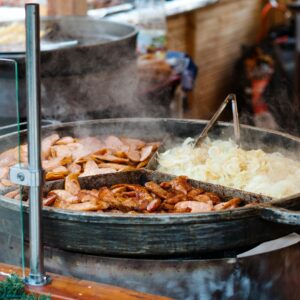
I’ll admit it when I first heard the word kielbasa, I shrugged. To me, it was just sausage. Nothing fancy. Nothing worth thinking about. The kind of thing you toss into a pan when you’re too tired to care.
But then one evening long day, empty stomach, zero patience I sliced one up and dropped it into a hot pan. And just like that, everything shifted. The sound came first. That gentle sizzle, like rain tapping on a tin roof. Then the smell rolled in smoky, deep, almost stubborn. It didn’t ask for attention. It demanded it.
That was the moment I realized I’d been wrong. Completely wrong.
Since then, I’ve cooked kielbasa more times than I can count. Burned it. Undercooked it. Overthought it. Sometimes nailed it perfectly. And along the way, I discovered something simple but important kielbasa isn’t just one thing. It’s a whole lineup of flavors, each with its own personality.
Smoked Kielbasa (My Reliable Favorite)
If my kitchen had a “default setting,” this would be it. Smoked kielbasa is the one I keep going back to, like an old song that never gets annoying.
The best part? It’s already cooked. That alone feels like a small miracle on busy days. No stress. No guessing. I slice it, toss it into the pan, and within minutes, it starts to brown.
And that moment the edges crisping, the light crackle, the smell filling the room it never gets old. It’s like the kitchen suddenly wakes up.
The flavor is bold. Smoky. Confident. It doesn’t need much help, which is perfect because, honestly, I don’t always feel like doing much.
I reach for it when:
- I’m short on time
- I don’t want to think too hard
- I need something that just works
It’s dependable. And let’s be real sometimes dependable beats fancy.
Fresh Kielbasa (The One That Taught Me a Lesson)
Fresh kielbasa humbled me fast.
The first time I bought it, I treated it exactly like smoked sausage. Big mistake. I assumed all kielbasa was ready to go. It wasn’t. Lesson learned thankfully before anyone had to eat it.
Once I slowed down and respected the process, though, things changed. Cooking fresh kielbasa feels different. Quieter. More patient. You can’t rush it.
I cook it slowly, let it brown gently, give it time to cook through properly. No shortcuts. No guessing. Just steady heat and a bit of trust.
The flavor? Cleaner. Softer. Not as loud as smoked kielbasa, but in a good way. It doesn’t shout it speaks calmly, and somehow that works just as well.
Now, when I use fresh kielbasa, I keep things simple:
- Cook it fully no rushing
- Let it brown properly
- Pair it with basic ingredients
It’s not quick, but that’s kind of the point. Some meals shouldn’t be rushed.
Turkey and Beef Kielbasa (My “Let’s Keep It Light” Options)
There are days when I look at my plate and think, “Alright, maybe let’s not go too heavy today.” That’s when turkey or beef kielbasa comes in.
Turkey kielbasa surprised me the most. I expected it to be boring dry, bland, forgettable. Turns out, I was wrong again. It’s lighter, yes, but it soaks up flavor like it’s trying to prove something. Add garlic, a bit of sauce, maybe a pinch of spice, and suddenly it’s alive.
Beef kielbasa feels different. Richer. A bit heavier. It has a deeper taste that sits somewhere between comfort food and something bold enough to stand out.
I usually go for these when:
- I want something lighter
- I’m trying new flavor combos
- I don’t want the meal to feel too heavy
They’re not replacements for pork kielbasa. They’re just different tools in the kitchen. And sometimes, that’s exactly what I need.
Regional Variations (Where Things Get Fun)
The first time I tried a more traditional Polish-style kielbasa, it caught me off guard in a good way. It wasn’t just food. It felt like something with history behind it. Strong garlic. Deep flavor. No hesitation at all.
That’s when it clicked. Kielbasa isn’t a single recipe. It changes depending on where it comes from, who makes it, and what they grew up eating.
Some versions lean heavily on garlic. Others are slightly sweet. Some carry different spices that shift the whole experience.
And honestly, that’s what keeps it interesting. Every variation feels like a new story on the same plate.
How I Pick Kielbasa at the Store (Without Overthinking It)
I used to grab whatever was cheapest. Let’s just say… that didn’t always end well.
Now I take a few extra seconds. Not a lot just enough to avoid regret later.
Here’s what I check every time:
| What I Look At | Why It Matters |
|---|---|
| Ingredients | Simpler usually means better |
| Texture | Firm is good, soft is suspicious |
| Color | Rich, natural color signals quality |
| Brand/source | Familiar names help reduce risk |
If the ingredient list looks like a science experiment, I quietly put it back. No drama. Just… no.
IV. Ingredients I Always Pair with Kielbasa
Kielbasa might be the star, but even stars need a supporting cast. And I learned that the hard way.
At first, I thought sausage alone was enough. Technically, yes. But once I started adding the right ingredients, everything changed. The dish felt fuller. Balanced. Like it finally made sense.
Vegetables That Never Let Me Down
Potatoes were my starting point. Simple. Reliable. I’d chop them, cook them until golden, then toss in the kielbasa. And somehow, they absorb every bit of flavor like quiet little sponges.
Cabbage came later. I wasn’t convinced at first if I’m honest, I avoided it. But once it softened and browned slightly, it turned sweet and balanced the richness perfectly.
Peppers and onions? That’s where things get lively. Bright colors. Slight sweetness. Suddenly the dish feels less heavy, more alive.
My go-to combos look like this:
- Potatoes + kielbasa = comfort food
- Cabbage + kielbasa = deep, rich flavor
- Peppers + onions + kielbasa = quick and vibrant
Sometimes I throw everything together and hope for the best. Most of the time, it actually works.
Seasonings I Can’t Ignore Anymore
I used to think kielbasa didn’t need seasoning. Turns out, I just hadn’t tried the right ones.
Garlic is non-negotiable now. The moment it hits the pan, everything smells better. Instantly.
Paprika adds warmth not heat, just a soft depth that rounds things out.
And mustard? That one surprised me. It cuts through the richness like a sharp line, keeping everything balanced.
My usual picks:
- Garlic for depth
- Paprika for warmth
- Mustard for balance
No measuring. Just instinct.
Sauces That Change Everything
This is where I start to have fun.
BBQ sauce turns the whole dish bold and sticky. It clings to the sausage, caramelizes slightly, and suddenly dinner feels louder like it has something to say.
Honey garlic sauce feels smoother. Softer. It wraps around everything in a way that just makes sense.
Soy sauce? That’s when things take a turn in a good way. It adds depth and saltiness, like the dish decided to travel somewhere new without telling me first.
Here’s how I think about them:
| Sauce | What It Does | When I Use It |
|---|---|---|
| BBQ | Sweet, smoky, bold | When I want strong flavor |
| Honey garlic | Smooth and balanced | When I want something softer |
| Soy sauce | Deep and savory | When I feel like switching things up |
Each one changes the mood completely. Same sausage. Different story.
Pantry Staples That Save Me on Lazy Days
Let’s be honest some nights, I don’t plan anything. No prep. No strategy. Just hunger staring me in the face.
That’s when the basics step in and quietly save the day.
Rice cooks fast and fills the plate. Pasta makes everything feel heavier and more comforting. Beans add texture and stretch the meal a little further.
I’ve thrown together combinations that had no business working but somehow did.
What I always keep nearby:
- Rice
- Pasta
- Beans
- Oil, salt, pepper
Nothing fancy. Just enough to turn “I have nothing to cook” into “okay, this actually works.”
V. Easy Kielbasa Recipes for Beginners
I can still picture that first time I cooked kielbasa. I wasn’t trying to be clever. I wasn’t aiming for anything fancy. I was just hungry… the kind of hungry that makes you stare into the fridge like it might suddenly start solving your problems.
I grabbed a pack of kielbasa, sliced it without much thought, tossed it into a hot pan and then something shifted. That deep, smoky aroma rolled through the kitchen like it owned the place. I didn’t feel like I was cooking. I felt like I had help.
That’s when it hit me kielbasa doesn’t make things harder. It quietly carries the meal.
So if you’re new to cooking, these recipes won’t judge you. They won’t fall apart if you mess up a step. They’re simple, forgiving, and honestly… kind of lifesavers.
One-Pan Kielbasa and Potatoes
There are nights when cooking feels like climbing a mountain. This dish is my way of staying at ground level.
I grab a few potatoes and chop them into uneven chunks. No ruler. No perfection. Just real cuts on a worn cutting board. Then I slice the kielbasa into thick rounds each slice landing with a soft thud, like a steady rhythm keeping me grounded.
Everything goes onto one tray. A drizzle of oil. Salt. Pepper. Maybe garlic if I’m feeling ambitious which, let’s be honest, depends on the day.
Into the oven it goes.
And then… time does its thing.
The potatoes start to crisp, edges turning golden and slightly stubborn. The kielbasa releases its juices, rich and smoky, coating everything like a quiet promise. When I pull it out, it smells like effort even though it barely took any.
It’s not just food. It’s relief on a plate.
Kielbasa Stir-Fry with Vegetables
This one feels fast, loud, and alive.
I open the fridge and grab whatever’s left behind bell peppers, carrots, broccoli that’s been waiting a bit too long. Nothing goes to waste here. It’s a bit messy, a bit unpredictable, but that’s the charm.
The pan heats up until it almost complains. Then everything hits at once.
Sizzle. Crackle. That sharp sound fills the room like applause.
The kielbasa joins in, and suddenly the whole thing feels like a performance. I splash in soy sauce, maybe a touch of honey, and the smell flips instantly savory with a hint of sweetness, bold and inviting.
It reminds me of busy evenings, quick decisions, and meals that come together in the middle of chaos.
And the truth? There’s no strict recipe here.
If it cooks, it works. If it tastes good, you’ve already won.
Simple Grilled Kielbasa
Some meals don’t need fixing. This is one of them.
I don’t marinate it. I don’t overthink it. I just put the kielbasa over heat and let it be.
As it grills, the outside tightens and chars just enough to catch your attention. That first bite has a gentle snap, followed by juicy, smoky flavor that feels almost too easy.
Sometimes I eat it with bread. Sometimes with mustard. And sometimes I won’t lie I just stand there and eat it straight from the grill like I’ve completely forgotten how plates work.
It’s simple. It’s messy. It’s perfect.
Quick Skillet Kielbasa with Onions
This dish feels slower. Quieter. Like a long exhale at the end of the day.
I start with onions. Thin slices, cooked gently until they soften and turn golden. I don’t rush them. There’s something peaceful about watching them change, slowly releasing that sweet, rich smell.
Then the kielbasa goes in.
No drama. No rush. Just two ingredients meeting in the middle.
Sometimes I add a splash of vinegar for brightness. Other times, a bit of mustard sneaks in for depth. Nothing complicated just small touches that make a difference.
It’s the kind of meal that doesn’t shout for attention. It stays with you quietly.
30-Minute Kielbasa Dinner Ideas
Some days feel like a race against the clock. Dinner sneaks up on you, and suddenly you’re scrambling.
That’s when I fall back on these quick ideas the ones that don’t ask too much but still deliver.
| Meal | What I Do | Why It Works |
|---|---|---|
| Kielbasa pasta | Toss slices with pasta, garlic, and a little cream | Rich taste, quick comfort |
| Rice bowl | Layer it over rice with vegetables | Simple, filling, balanced |
| Wraps | Roll it with sauce and greens | Fast, easy, portable |
| Soup | Add to broth with beans | Warm, steady, satisfying |
These meals aren’t about impressing anyone. They’re about making it through the day with something warm in your hands.
VI. Healthy Kielbasa Recipes
I used to think “healthy” and kielbasa didn’t belong together. It sounded like a mismatch. Like trying to mix two worlds that refused to meet.
But over time, I realized something simple it’s not about removing things. It’s about adjusting how you use them.
And those small shifts? They changed everything.
Low-Carb Kielbasa Meals
Cutting carbs felt strange at first. No rice, no bread it felt like something was missing.
But then I started experimenting.
I swapped potatoes for cauliflower. I used cabbage instead of noodles. One night, I tossed kielbasa with cabbage in a pan, and I remember pausing after the first bite.
It worked.
It felt lighter, but still satisfying. Filling without that heavy feeling that makes you want to nap immediately after eating.
And the best part? It didn’t feel like I was giving anything up.
Keto-Friendly Kielbasa Dishes
At first, keto sounded complicated. Too many rules. Too many “don’ts.”
But kielbasa made it simple.
I paired it with eggs, cheese, and creamy sauces. One go-to meal became a skillet with kielbasa, spinach, and a bit of cream.
It’s rich. Comforting. Almost too good.
Sometimes I catch myself thinking, “There’s no way this counts as healthy.” But it does. It’s just about balance and choices.
High-Protein Meal Ideas
There was a time when I’d eat and still feel hungry not long after. That constant search for snacks it gets tiring.
That changed when I focused on protein.
Kielbasa helped, but I built around it. Eggs, beans, yogurt-based sauces. One simple combo stuck with me kielbasa with scrambled eggs and vegetables.
It’s not flashy. But it works.
It keeps you full. Keeps you steady. No constant snacking. No chasing hunger like it’s a moving target.
Using Turkey Kielbasa for Lighter Recipes
Switching to turkey kielbasa felt like a small step but it made a difference.
I remember the first time trying it, expecting it to taste… flat. But it didn’t. It still had that smoky flavor, just a bit lighter, a bit cleaner.
Now I reach for it when I want something less heavy. It fits perfectly in stir-fries and quick meals.
It’s proof that lighter food doesn’t have to be boring.
Tips for Reducing Fat and Sodium
This part took time. I didn’t want to lose flavor, but I also didn’t want meals that felt too heavy or too salty.
Here’s what actually helped me:
- I drain excess oil after cooking
- I add more fresh vegetables
- I stop adding salt automatically
- I taste first, then adjust
- I choose lower-sodium options when I can
Nothing drastic. Just small habits that slowly reshape how I cook.
Cooking with Kielbasa: Dinner Ideas and Traditional Recipes That Actually Stick With You
I’m going to keep this honest and simple.
No dramatic kitchen fantasy. No “life changed forever” nonsense.
Just me, standing by the stove, cutting things, frying things, tasting things, and occasionally wondering why I didn’t just order noodles.
Kielbasa is one of those foods I never overthink. It shows up strong. It cooks fast. It makes the whole kitchen smell like something is actually happening even when I’m just trying to survive dinner after a long day.
It’s not fancy. It doesn’t try to be. And that’s exactly why it works.
VII. Dinner Ideas Using Kielbasa
When I cook kielbasa, I don’t treat it like a delicate ingredient. I treat it like a reliable tool. It’s flexible. It forgives mistakes. It doesn’t complain if I’m distracted.
Slice it, fry it, bake it, throw it into a pot it still behaves like it belongs there.
Honestly, it’s the kind of food that makes me look like I planned dinner, even when I didn’t.
Kielbasa Pasta Recipes
This is my “I need food fast but still want it to feel like a meal” option.
I usually start the same way every time:
I slice the kielbasa into rounds. Nothing fancy. I toss it into a hot pan and let it brown a bit. That sound the light sizzle is already half the reward.
Then I add onions or garlic if I have energy. If not, I don’t. The sausage still carries the dish.
After that, it’s just pasta and sauce.
Creamy sauce makes it feel heavy and comforting, like a blanket in food form. Tomato sauce keeps it sharper, a little brighter, almost like it’s trying to wake me up.
What I notice every time is this: pasta alone feels flat. But once kielbasa enters the pan, everything suddenly has direction. Like the dish found its voice.
Kielbasa Rice Bowls
Rice bowls are my “fridge rescue mission.”
Leftover rice? Good. Half a bell pepper? Perfect. Random vegetables sitting around like they’re waiting for purpose? Even better.
My process is always messy but effective:
I cook rice. I fry kielbasa until it gets those browned edges that smell like trouble in a good way. Then I toss in whatever vegetables are around.
The sauce is where I stop pretending to be precise. Soy sauce, chili sauce, garlic butter whatever my hand grabs first.
What comes out is not complicated food. It’s balanced chaos.
Soft rice. Smoky sausage. Salty sauce. It all just works together like it had a meeting before I got involved.
Kielbasa Soup and Stew Recipes
This is where kielbasa stops being “an ingredient” and becomes a storyteller.
The moment it hits hot liquid, something changes. The broth thickens in personality. The smell deepens. It feels like the pot suddenly knows what it’s doing.
I usually go in one of three directions:
Potato soup when I want something thick and filling.
Bean stew when I want depth without thinking too hard.
Vegetable soup when I want to pretend I’m eating light (even though kielbasa is in it… so let’s be real).
The longer it simmers, the better it gets. That’s the magic rule I’ve learned: patience turns average soup into something that feels like it took effort even when I barely did anything.
Sheet Pan Kielbasa Dinners
Sheet pan meals are my lazy genius moment.
Everything goes on one tray. That’s the whole philosophy.
I chop kielbasa. I throw in potatoes, carrots, onions, peppers whatever is not arguing with me that day. Oil, salt, pepper, paprika. No ceremony.
Then the oven does the heavy lifting while I pretend I’m “organizing my life.”
What comes out is always slightly different, but always good:
Crispy edges. Soft vegetables. Smoked fat coating everything like it signed a contract with flavor.
And the best part? Only one pan to wash. That alone deserves respect.
Comfort Food Classics with Kielbasa
This is where I stop trying to be creative and just eat like a human.
Sometimes I fry kielbasa and eat it with mashed potatoes. No sauce. No decoration. Just warm, soft potatoes and salty sausage.
Sometimes it’s eggs in the morning. Simple, fast, slightly greasy, and honestly perfect.
Other times it becomes a sandwich with mustard that makes me cough a little but I still go back for another bite like nothing happened.
And mac and cheese with kielbasa? That one feels like cheating. Like I broke a rule but nobody is enforcing it.
These meals aren’t about skill. They’re about comfort. Heavy, warm, familiar comfort.
VIII. Traditional Kielbasa Recipes
Traditional kielbasa cooking feels different. Slower. More grounded. Like the food has history sitting quietly in the background.
It’s not trying to impress anyone. It’s trying to last.
Authentic Polish Kielbasa Dishes from Poland
In traditional Polish cooking, kielbasa isn’t a side character. It’s part of daily life.
I’ve learned that it’s often served very simply:
Sliced with bread. Mustard on the side. Nothing extra trying to steal attention.
Sometimes it’s boiled. Sometimes grilled over open heat. Sometimes just placed on a table where people pick at it while talking.
The flavor is steady: smoky, garlicky, slightly rich. It’s not shy food. It’s honest food.
Kielbasa with Sauerkraut
This combination surprised me the first time I tried it.
I didn’t expect sour and smoky to get along so well, but they do.
I cook onions first slowly, until they stop arguing with the pan. Then I add sauerkraut. Then kielbasa goes in.
It simmers together until everything stops feeling separate.
The sauerkraut brings sharpness. The kielbasa brings salt and smoke. It’s like two strong personalities deciding not to fight anymore.
The first bite is intense. The second bite makes more sense. By the third, I stop thinking and just eat.
Bigos (Hunter’s Stew)
Bigos is not something you rush. I learned that quickly.
It has layers like it was built by someone who believed food should take its time.
Cabbage, sauerkraut, mushrooms, meat, kielbasa. Everything goes into the pot like it’s moving into a shared house.
The strange part is the repetition. Cook it, cool it, reheat it. Over and over.
At first I thought that sounded unnecessary. Then I tasted it after a second round and understood: it’s not repetition, it’s development.
Each cycle makes it deeper. Richer. More serious.
This is not quick food. This is patient food. The kind that doesn’t care about your schedule.
Holiday Recipes and Cultural Meaning
Kielbasa shows up in gatherings like an old friend who doesn’t need an invitation.
It’s on tables during holidays, family meals, celebrations, quiet weekends that accidentally turn into feasts.
It sits next to bread, pickles, mustard, soups. It doesn’t try to be the star, but somehow it always ends up in the middle of the table anyway.
What I’ve noticed is simple: it’s not treated like luxury. It’s treated like trust.
Food you can rely on when people are around and time slows down.
Classic Cooking Techniques
I’ve tried a few ways, and none of them are complicated.
Boiling keeps it soft and mild.
Grilling adds smoke and char.
Pan-frying gives it crisp edges that I always end up eating straight from the pan (no shame).
Slow cooking blends it into soups until it disappears into flavor.
The only real mistake is rushing it too hard. High heat dries it out fast. I learned that the hard way once. Maybe twice. I don’t like talking about it.
Quick Overview
| Style | What I Do | What I Get |
|---|---|---|
| Pasta | Fry + mix | Heavy comfort |
| Rice bowls | Fast cooking | Balanced meals |
| Soup/stew | Slow simmer | Deep flavor |
| Sheet pan | Oven roast | Easy + crispy |
| Traditional | Simple methods | Strong, rich taste |
Creative and Modern Kielbasa Recipes + How I Actually Cook It (My Real Kitchen Story)
I didn’t plan for kielbasa to become a regular thing in my kitchen. It wasn’t some “culinary discovery moment” with candles and music playing in the background.
No.
It was more like this: I was hungry, tired, and staring into the fridge like it owed me money.
And there it was.
Kielbasa.
So I cooked it. No expectations. No strategy. Just heat, pan, hunger.
And somehow… it stuck around after that.
Now it’s one of those ingredients I reach for when I don’t want cooking to feel like a full-time job. It’s not fancy. It’s not delicate. It’s just solid, smoky, reliable food that never complains.
Let me show you how I actually use it not the perfect version, but the real-life, slightly messy, very honest one.
IX. Creative and Modern Kielbasa Recipes (My Way, Not a Chef’s Way)
Kielbasa tacos and wraps
The first time I put kielbasa in a taco, I didn’t tell anyone.
Not because it was secret. But because I wasn’t sure it was a good idea.
I sliced it thin, threw it into a hot pan, and let it crisp up until the edges looked a little too confident. The smell filled the kitchen fast smoky, rich, a little greasy in that comforting way that makes you forget your problems for a second.
Then I grabbed a tortilla and just started building:
- shredded cabbage
- a quick squeeze of chili sauce
- lime juice when I wasn’t feeling lazy
- sometimes nothing else at all
First bite? I actually paused.
Not dramatic pause. Just that quiet moment where your brain goes, “Okay… this works.”
Wraps are even lazier. I just roll everything up and eat it standing in the kitchen like I’m late for something, even when I’m absolutely not.
Kielbasa pizza ideas
I remember the first kielbasa pizza I made like it was a slightly suspicious experiment.
I didn’t announce it. I didn’t invite opinions.
I just sliced the sausage, scattered it over dough, and acted like I knew what I was doing.
On top went:
- onions (because they always save you)
- cheese (because life demands it)
- sauce, just enough, not too much
When it came out of the oven, I knew I had done something dangerous.
Not bad-dangerous. More like “why does this smell this good?” dangerous.
Now I don’t hesitate anymore. I do things like:
- kielbasa with caramelized onions (this one feels unfairly good)
- BBQ sauce instead of tomato sauce when I feel rebellious
- pineapple when I feel like starting harmless kitchen arguments
It’s not traditional pizza.
It’s just pizza that doesn’t ask for permission before tasting good.
Fusion dishes with global flavors
This is where I stop overthinking completely.
I’ve dropped kielbasa into fried rice at midnight when nothing else made sense.
I’ve stirred it into pasta like I was trying to fix a boring day.
I’ve even tossed it into a quick curry once just to see if the kitchen would judge me.
It didn’t.
Everything just worked in its own way.
That’s the strange thing about it. It doesn’t fight other flavors. It just slides into the mix like it belongs there.
No drama. Just food doing food things.
Slow cooker kielbasa recipes
Slow cooker days are my “I’m not emotionally available for cooking” days.
I don’t stand there measuring like a chef.
I just throw things in:
- sliced kielbasa
- potatoes
- onions
- whatever sauce is hanging around in the fridge
Then I walk away.
That’s the whole technique. Walking away.
Hours later, I come back and open the lid. The smell hits first deep, warm, slow-cooked like the kitchen has been thinking for me all day.
It feels like I accomplished something important, even if I mostly just… left things alone.
Air fryer kielbasa dishes
I’ll admit it I didn’t trust the air fryer at first.
It felt like one of those kitchen gadgets people hype up too much.
Then I tried kielbasa in it.
That was it. Game over.
I slice it, toss it in, hit start, and a few minutes later it comes out:
- crisp edges
- juicy inside
- no effort from me
It’s almost disrespectful how easy it is.
Sometimes I just stand there eating straight from the basket like plates are optional and manners are negotiable.
X. How I Actually Cook Kielbasa (No Rules, Just Reality)
I’m not following chef rules here. I’m following hunger and common sense.
That’s it.
Grilling kielbasa
Grilling it is simple.
I heat the grill, place it on, and listen.
That sizzling sound? It feels like approval from the food itself.
I turn it when it looks right. Not when a timer tells me. Not when a recipe says so. Just instinct.
It comes off slightly charred outside, juicy inside, and for a moment I feel like I actually know what I’m doing in life.
That feeling doesn’t last long, but it’s nice while it’s there.
Pan-frying technique
This is my most-used method. Mostly because it’s fast and I’m impatient.
Pan on. Heat up. Kielbasa in.
That’s the whole plan.
The sausage starts browning, fat melts into the pan, and suddenly the kitchen smells like something serious is happening.
I flip pieces when I feel like it needs attention. No timing. Just watching and smelling.
What comes out is:
- crispy edges
- soft, juicy center
- dangerously easy to keep eating
I’ve definitely “tested one piece” and accidentally finished half the pan. It happens.
Baking and roasting
This is my lazy but smart method.
I throw everything on a tray:
- kielbasa
- vegetables
- maybe some seasoning
- maybe not
Then into the oven it goes.
I forget about it.
When I return, everything looks slightly caramelized, like it’s been through something together and came out better for it.
There’s something comforting about that. Nothing separate anymore. Just one shared flavor story.
Boiling and steaming
I don’t do this often, but when I do, it’s usually for calm meals.
Boiling softens the flavor. Makes it gentler. Less bold, more quiet.
I slice it later into soups or quick dishes when I don’t want anything heavy.
It’s not exciting.
But not every meal needs to perform. Some just need to exist and help you get through the day.
Air fryer method (again, because it deserves it)
If speed had a champion, this would win.
Slice. Drop. Cook.
That’s it.
A few minutes later, you’ve got crispy, hot, ready-to-eat food without thinking too hard.
It feels like cheating, but the kind you don’t feel guilty about.
More like a quiet win on a long day.
XI. Tips for Making the Best Kielbasa Recipes
I’ll tell you something straight. The first time I cooked kielbasa at home, I thought it was going to be effortless. I mean, it’s already cooked sausage, right? So I tossed it in a pan, got distracted, came back later, and… let’s just say the kitchen smelled like confidence and disappointment had a fight. The sausage wasn’t ruined, but it definitely wasn’t proud of me.
That day stuck with me.
Since then, I’ve learned kielbasa isn’t difficult but it does demand attention. Not constant hovering. Just respect. A little care. A little timing. And suddenly, it goes from “meh” to something you actually pause for.
Now I cook it with a different mindset. Simple. Calm. No rush.
How I bring out flavor (without overdoing it)
I used to think cooking meant adding more more spice, more heat, more everything. Kielbasa quickly humbled me. It already comes with its own personality. Smoky, rich, a bit bold. It doesn’t need a makeover. It just needs a good stage to perform on.
Here’s how I do it now:
- I always start with a proper sear. That golden-brown crust? That’s where the magic quietly builds. It smells like something is about to go right.
- I slowly cook onions until they turn soft and sweet. They melt into the sausage like they were always meant to be there, like old friends meeting again after years.
- A little garlic and black pepper goes in sometimes. Not a storm just a whisper. Enough to wake things up without shouting.
- And on good days, I splash in a bit of beer or broth. It sizzles, it steams, and suddenly the whole kitchen feels alive.
The funny thing is, I used to think more seasoning meant better food. Now I know better. The real skill is knowing when to stop adding.
Best cooking temperatures and timing
If there’s one lesson kielbasa taught me, it’s this: it doesn’t like to be bullied.
I’ve rushed it. I’ve cranked up the heat like I was late for something important. All that did was make it dry, split, and slightly offended.
Now I go slower. And it behaves beautifully.
- Pan cooking: medium heat, about 8–12 minutes
- Oven: 375°F (190°C), around 20–25 minutes
- Grill: medium heat, 10–15 minutes, turning often like you’re babysitting a sleepy child
- Simmering: low heat, 15–20 minutes if I want it extra soft and gentle
High heat looks productive. It’s not. It’s just loud failure pretending to be progress.
Slow heat, though that’s where things come together like a quiet conversation that actually matters.
What I pair it with (and why it works)
I don’t treat kielbasa like a solo act anymore. It’s more like the main character in a story that needs supporting roles to shine.
So I think in balance:
- Something creamy like mashed potatoes
- Something sharp like sauerkraut
- Something fresh like a green salad
- Something starchy like rice or warm bread
I don’t try to impress anyone with complicated sides. I just ask myself: what makes the bite feel complete?
Sometimes the answer is fancy. Most times, it’s not. And honestly, that’s the beauty of it.
Storage and reheating (where I used to mess up badly)
Leftovers used to betray me.
I’d store kielbasa carelessly, reheat it like I was in a hurry, and end up with something rubbery that felt like chewing on regret. Not great.
Now I keep it simple:
- I let it cool down before storing it (no shortcuts here)
- I keep it in a sealed container in the fridge for up to 4 days
- If I freeze it, I try to use it within 1–2 months
Reheating matters more than people think:
- In a pan: I add a splash of water and warm it slowly
- In the oven: around 350°F so it doesn’t dry out
- In the microwave: covered, so it stays soft instead of turning tough and moody
I don’t rush it anymore. Reheating food fast is like rushing a conversation you miss everything good.
Mistakes I’ve made (so you don’t have to)
I’ve made almost every mistake in the book. No shame in it. Just lessons wrapped in smoke and trial-and-error.
Here are the big ones:
- Cooking on too high heat (this one destroys everything fast)
- Skipping the sear step (you lose flavor before it even begins)
- Overboiling it like it’s soup meat (it’s not meant for that life)
- Cutting it too early and losing all the juices on the board
- Forgetting balance and ending up with a plate that feels too heavy
Kielbasa is forgiving, yes. But it’s not magic. Treat it badly, and it will remind you.
XII. Best Side Dishes for Kielbasa
At some point, I stopped thinking of kielbasa as “just sausage.” That’s too small for it. Now I see it as a base. A starting point. The sides? They decide the mood, like lighting in a room.
Mashed potatoes and roasted vegetables
This one feels like a warm blanket on a tired day.
I make mashed potatoes soft, buttery, and smooth enough to feel like comfort itself. Then I roast vegetables carrots, peppers, onions until they caramelize and smell slightly sweet.
Put it all together, and it feels like a quiet evening where nothing is wrong and nothing needs fixing.
Simple. Heavy in the best way.
Sauerkraut and cabbage dishes
This combo has attitude.
Sauerkraut comes in sharp and sour, cutting through the richness like a knife through butter. Braised cabbage softens things, adds a gentle sweetness, and calms everything down.
It’s a conversation between bold and soft. One bite hits strong, the next feels clean. It keeps your taste buds awake.
Honestly, it never gets boring.
Rice and grains
Sometimes I don’t want drama. Just something steady underneath everything.
- White rice when I want comfort
- Brown rice when I want something filling
- Quinoa when I want light and clean
- Barley when I want chew and texture
I started cooking grains in broth instead of plain water. Small change. Big difference. Suddenly, the base isn’t empty it has character.
Fresh salads for contrast
I used to ignore salads. I thought they were just decoration pretending to matter.
I was wrong.
A cold, crisp salad next to hot kielbasa is like hitting a reset button between bites.
- Cucumber and onion salad
- Tomato salad with lemon dressing
- Simple greens with vinaigrette
- Apple slaw with crunch and sweetness
It wakes everything up again. Like opening a window in a warm room.
Bread and rolls
Bread is the quiet hero nobody talks about enough.
Soft rolls soak up juices. Crusty bread adds bite. Garlic bread turns everything slightly indulgent, like you decided today should be better than average.
Sometimes I don’t even bother plating properly. I just take a slice of bread, a piece of kielbasa, a dab of mustard, and eat standing in the kitchen.
No ceremony. Just food doing its job.
Kielbasa Meal Prep Ideas (My Real Kitchen Routine)
There’s this moment in my week when cooking stops feeling like something I enjoy and starts feeling like a full-time negotiation.
I stand there, fridge open, staring like it owes me money.
What’s quick? What won’t dirty every pan I own? What will still taste like real food and not like I gave up halfway through life?
That’s usually when kielbasa shows up in my kitchen story. Not loudly. Not with drama. Just quietly sitting there like, “I got you. Relax.”
XIII. Kielbasa Meal Prep Ideas
Batch cooking kielbasa (my “don’t overthink it” method)
When I batch cook kielbasa, I don’t treat it like a fancy recipe. Honestly, I treat it like building blocks for survival meals during a busy week.
Most of the time, I do it in one of two ways:
I slice it into thick coins. Nothing delicate. Nothing complicated.
Then I either:
- Toss it in a hot pan until the edges get dark and crispy
- Or throw it in the oven and let it cook while I do literally anything else
The smell alone makes me check the oven too early every time. Every single time.
Once it’s cooked, the real magic starts. Because now it’s not just sausage anymore it’s a base for everything.
From one simple batch, I end up with:
- Roasted tray meals with potatoes, onions, and peppers all mixed together like they planned it
- Rice bowls with garlic, greens, and whatever sauce I can find in the fridge
- Pasta dishes where kielbasa steps in like it belongs there (and honestly, it does)
I like this part the most. One cooking session, and suddenly I’ve got three or four different meals that don’t feel repetitive. It’s the same food, but it shows up in different outfits.
Freezer-friendly meals (my backup plan for lazy days)
I don’t trust future me. I’ve learned that the hard way. So I always freeze a portion or two.
Kielbasa is one of those rare foods that actually behaves in the freezer. It doesn’t turn sad or weird if you handle it right.
Here’s how I usually store it:
1. Pre-cooked slices
I portion them into small bags. Nothing fancy. Just enough for one quick meal.
Later, I can toss them straight into a pan. No waiting. No drama. Just heat and eat.
2. Mixed skillet packs
This is my “future rescue meal.”
I mix cooked kielbasa with things like onions, peppers, or beans. Then I freeze it as a ready base.
Later, it becomes:
- Soup base
- Stir-fry starter
- Random “I don’t feel like thinking” dinner
It’s basically my edible emergency kit.
3. Breakfast hash packs
This one saves my mornings.
I cook potatoes, onions, and kielbasa together, then freeze it in portions.
In the morning, I reheat it, maybe crack an egg on top, and suddenly I look like someone who has their life together. Which is funny, because I absolutely don’t.
Reheating is fast. And I’ve noticed something simple: pan reheating keeps the texture better than the microwave. The microwave is fine, but the pan brings it back to life.
The microwave just kind of… wakes it up confused.
Weekly meal planning tips (how I keep it from becoming chaos)
I don’t do complicated meal plans. I tried once. It lasted three days.
Now I keep it simple and flexible.
Here’s what actually works for me:
1. I choose 2 main ideas per week
One dinner idea. One backup lunch idea.
That’s it. No spreadsheet energy. No stress.
2. I repeat ingredients on purpose
I don’t fight repetition anymore.
If I buy:
- Bell peppers
- Onions
- Potatoes
I use them everywhere. I stopped pretending I’m going to cook 12 different vegetables in one week.
3. I cook once, then remix later
This is the real strategy.
One batch of kielbasa turns into:
- Rice bowls
- Wraps
- Pasta meals
Same base. Different mood.
It feels like cheating, but it’s not. It’s just smart laziness.
4. I keep backup meals ready
Because life doesn’t ask permission before getting busy.
Frozen portions save me from ordering takeout when I’m too tired to think. And honestly, they’ve saved my wallet more times than I can count.
The goal here is not perfection. The goal is fewer decisions when I’m already tired.
And that alone changes everything.
Quick lunch ideas using leftovers (my 10-minute saves)
Leftover kielbasa is where I stop cooking and start assembling.
No stress. No plan. Just whatever works.
Here’s what I usually throw together:
- Wraps with greens, kielbasa, and a quick sauce
- Fried rice using leftover rice, eggs, and sliced sausage
- Skillet bowls with vegetables and whatever sauce I find first
- Cold pasta salad with olive oil, lemon, and chopped kielbasa
These lunches don’t ask much from me. That’s why I like them.
Most of them take under 10 minutes. Sometimes even less if I’m really moving fast.
It’s not about cooking at that point. It’s about assembling something edible before hunger turns me into a bad decision machine.
XIV. Frequently Asked Questions (FAQ)
Is kielbasa already cooked?
This one confused me at first, so I always check the package now.
Some kielbasa is already smoked and fully cooked. You just heat it up.
Others are raw and need proper cooking.
The label usually tells you clearly. If not, I don’t guess I check twice. I’ve learned not to gamble with dinner.
Can you eat kielbasa without cooking it?
If it’s fully cooked and smoked, yes, you can eat it cold.
But honestly? I don’t enjoy it that way.
Cold kielbasa feels like it’s missing its personality. Once it’s warmed up, the flavor gets louder, richer, better.
So technically yes. But practically? Heat it.
What is the best way to cook kielbasa?
I’ve tried a few methods, and they all have their mood:
- Pan-frying: my favorite. Fast, crispy edges, big flavor
- Grilling: smoky and a bit dramatic in a good way
- Oven baking: best when I’m cooking a lot at once
- Boil then sear: keeps it juicy, then adds texture
If I’m honest, I reach for the pan most days. It’s quick and forgiving, like a good friend who doesn’t judge my cooking skills.
How long does kielbasa last in the fridge?
Cooked kielbasa usually lasts about 3 to 4 days in the fridge if stored properly.
I keep it in a sealed container and try not to forget it in the back corner of the fridge. That’s where good intentions go to disappear.
Can kielbasa be frozen?
Yes, and this is where it really earns its place in my kitchen.
I freeze both cooked and uncooked portions. It holds up well.
When I wrap it properly, it stays good for a couple of months. After reheating, it still tastes solid. Not perfect, but solid enough to save a busy day.
XV. Conclusion (First-Person Rewrite)
I’ll be honest with you. I didn’t always think much of kielbasa.
For a long time, it just sat in my fridge like a quiet backup plan. Nothing exciting. Nothing I planned my day around. Just that “maybe later” food you forget until you’re too hungry to care about being creative.
I used to walk past it like it didn’t have anything to say to me.
Funny thing is… I was the one not listening.
There were plenty of nights when I came home drained. The kind of tired that sits in your bones. My brain felt loud, but not useful. More like static. I didn’t want to think. I didn’t want to measure anything. I didn’t want steps or instructions.
I just wanted food to happen.
Fast. Warm. Real.
Not a performance. Not a project. Just something that made sense without asking too much from me.
That’s usually when kielbasa started to matter more than I expected.
I still remember the first time I actually noticed it properly.
I wasn’t trying to be clever. I wasn’t chasing any recipe idea. I just sliced it, tossed it into a pan, and turned on the heat.
That’s it.
No ceremony. No planning board in my head. Just me and a pan.
And then it happened.
The sound came first. That sharp, comforting sizzle. Like the kitchen was waking up and stretching its arms. Then the smell followed. Warm, smoky, steady. Not fancy at all. Just honest.
And for a second, I remember thinking, “Oh… this is actually going to work.”
Not because I planned it well.
Because I didn’t get in its way.
That moment changed something for me.
I started to understand that kielbasa isn’t trying to impress anyone. It’s not here to win awards or be delicate. It shows up, does its job, and stays out of drama.
And honestly, that’s rare.
Most ingredients behave like they want attention. They demand timing, technique, patience, focus. Kielbasa? It just looks at you like, “What’s next?”
No attitude. No stress.
Just readiness.
I’ve cooked enough to know something simple: most people aren’t cooking for perfection.
They’re cooking for relief.
That’s the part nobody talks about.
You don’t always want a masterpiece. You want the day to stop pushing back for five minutes. You want your stomach to stop complaining. You want your brain to go quiet for a bit.
And kielbasa fits into that space without asking questions.
Over time, I stopped treating it like a “last option.”
It became more like a starting point.
That’s when things got interesting.
I started messing around in the kitchen in a very unplanned way. Not the kind of experimenting you see in cooking shows. More like: “Let’s see what happens if I throw this in and hope I don’t regret it.”
Some nights I’d add garlic until the kitchen smelled strong enough to wake up the neighbors.
Other nights I’d toss in onions, peppers, leftover vegetables that were quietly begging for purpose.
There were even moments where I added sauces just because they were sitting there looking at me like they wanted attention.
And yes… once I added a bit of honey.
No strategy. No deep thinking. Just curiosity and hunger teaming up like bad decision partners.
But somehow… it worked more often than it should have.
Not everything was perfect, of course.
I’ve made a few combinations I would never proudly announce at a dinner table. There was one attempt with too much chili that turned the whole meal into a quiet test of endurance.
I remember sitting there, eating slowly, wondering if I had just emotionally offended my own dinner.
But even that wasn’t really failure.
It was just feedback with flavor.
A reminder that cooking doesn’t punish you for trying. It just shows you what happens when you push a little too far.
And I kind of respect that.
What surprised me most wasn’t even the taste.
It was how flexible it is.
One ingredient, so many directions.
Some days I want it crispy, a little smoky, with edges that feel like they’ve done some work.
Other days I let it simmer slowly with vegetables until everything turns soft and comforting.
Sometimes it’s part of a full plate with rice or potatoes.
Other times it stands alone like it owns the meal and doesn’t need backup.
And weirdly enough… it always fits.
Life doesn’t always give you perfect cooking conditions.
Most days are rushed. Messy. Loud. Interrupted.
You don’t always get time to think like a chef. Sometimes you’re just trying to survive dinner before everything else starts again.
And that’s where simple food matters more than people admit.
Not complicated food.
Not “impressive” food.
Just food that works.
I’ve learned something I didn’t expect from all of this.
Good meals don’t need to feel like a project.
They just need to feel like they belong in your life.
There’s a big difference there.
A complicated dish can impress people. Sure.
But a simple one can actually help you. It can sit between you and a stressful day and quietly say, “You’re okay for now.”
That matters more than presentation.
I’ve had days where everything felt like it was moving too fast.
Messages coming in. Work stacking up. Thoughts bouncing around like they had no respect for boundaries.
And in the middle of all that noise, I’d end up in the kitchen.
Pan on heat. Sizzle starting. That familiar sound again.
And just like that, things would slow down.
Not in a dramatic way. Not like the world stops.
More like my mind finally agrees to take a breath.
That’s all it is.
A small pause that feels like it was missing.
I don’t think people give enough credit to moments like that.
Not everything needs to be big to matter.
Sometimes the smallest routines are the ones that hold everything together without making noise about it.
Cooking kielbasa isn’t some life-changing ritual.
But it has this way of grounding things when life gets too scattered.
And I didn’t expect that from something I once ignored in my fridge.
If I had to describe why I still reach for it, it’s simple.
It doesn’t complicate my life.
It doesn’t demand extra energy.
It doesn’t try to be something it’s not.
In a world where almost everything asks for more effort, more planning, more attention… there’s something refreshing about an ingredient that just lets you cook.
No pressure.
No performance.
Just food.
Now I don’t think of kielbasa as just sausage anymore.
I think of it as a shortcut, but not in a lazy way.
More like a smart detour.
The kind that saves energy without stealing the experience.
It doesn’t remove cooking from your life. It just removes the unnecessary struggle around it.
And I wish more things in life worked that way.
Honestly, I really do.
So here’s what I’ve come to accept.
Not every meal needs to be impressive.
Not every night needs a plan.
And not every fridge decision needs overthinking.
Sometimes you just work with what you have.
Sometimes you keep it simple on purpose.
And sometimes… that’s exactly what saves the day.
If you ever find yourself standing in front of your fridge, tired in that deep way, not wanting to calculate anything or follow steps or become a “chef” for the night don’t overdo it.
Just pick something simple.
Let it be enough.
Let it be imperfect.
You’ll be surprised how often that still turns out right.
And if kielbasa is there, well… you’re already halfway to a meal that will probably treat you better than you expected.
No drama.
No stress.
Just something warm on a regular day.
Because at the end of it all, quick meals aren’t really about saving time.
They’re about saving energy.
And sometimes, that’s the real win.
Not doing more.
Just doing enough to keep going without feeling like everything is too heavy.
Cooking kielbasa doesn’t feel complicated anymore. It feels familiar. Easy. Almost forgiving.
Some days, I follow a plan. Most days, I don’t. I just throw things into a pan, listen to that steady sizzle, and let it guide me.
And funny enough, those messy, unplanned meals? They usually turn out the best.
Looking back, it’s kind of funny how something so simple became a regular part of my cooking routine.
Kielbasa didn’t win me over with complexity. It didn’t try to impress me with fancy techniques or rare ingredients.
It just worked.
And honestly, that’s what makes it special.
Because at the end of a long, messy, unpredictable day, when everything feels slightly out of control, it’s nice to have something in the kitchen that shows up, does its job, and leaves you with a plate of food that actually makes you smile.
No stress. No drama. Just solid, satisfying cooking.
After cooking kielbasa enough times, I’ve realized something I didn’t expect.
It’s not about perfection. Not even close.
It’s about attention.
Don’t rush it. Don’t drown it in heat. Don’t try to force it into something it’s not.
Just small, steady choices. Patient hands. A little timing.
Funny how something as simple as sausage can teach you that good things don’t like to be hurried.
Closing thoughts
Kielbasa meal prep isn’t about cooking something impressive.
It’s about building a small system that quietly works when life gets loud.
One cooking session. A few basic ingredients. And suddenly the rest of the week feels lighter.
No stress. No overthinking. Just food waiting for you when you need it most.
And honestly, that’s enough.
Kielbasa doesn’t try to impress me. That’s what I like about it.
It fits into pasta, rice, soup, or a holiday table without losing itself. It doesn’t disappear into the background, and it doesn’t need decoration to matter.
Some ingredients shout. Kielbasa doesn’t. It just shows up, does its job, and quietly makes the meal feel complete.
And in my kitchen, that’s more valuable than any complicated recipe I don’t have the energy to follow.
Cooking kielbasa taught me something I didn’t expect.
Food doesn’t have to be complicated to matter.
It doesn’t demand perfection. It doesn’t punish mistakes. It meets you where you are whether you’re tired, hungry, or just trying to get through the day.
Some nights, that’s all I need.
A pan. A knife. A bit of heat. And something that simply works.
And if things go wrong? If I burn it, overcook it, or forget something?
Well… kielbasa has a funny way of forgiving you.
There’s always tomorrow.
I didn’t plan for kielbasa to become this useful in my life.
It just did.
One day it was “that thing in the fridge,” and now it’s my backup plan, my lazy-day solution, my no-stress dinner when my brain is done making decisions.
It doesn’t try to impress anyone. It doesn’t pretend to be something it’s not.
It just shows up, gets cooked, fills the plate, and quietly does its job.
And honestly, in a world where everything feels like it’s asking for effort… that kind of simplicity hits different.
Calculate Recipe Calories
World Trade Center Footage | Webex Costs | Virtual Data Rooms | Structures Annuity Settlement | Sell Annuity Payment | Neuson | Online Classes | Nunavut Culture | Online College Course | Motor Replacements | Motor Insurance Quotes | Mortgage Adviser | Met Auto | Tax credit | Help desk software | Home refinancing | Urgent care | Marketing integration | Debt relief | Bitcoin | Fitness center software | Insurance | Gas | Electricity | Weight loss | Sell house for cash | Automotive repair | Loans | Internet marketing | Mortgage | Attorney | SEO specialist | Lawyer | Donate | Conference Call | Treatment | Degree | Software | Credit | Classes | Investing | Recovery | Trading | Rehab | Hosting | Cord Blood | Claim | Automotive warranty | Paintless dent repair | Mesothelioma Law Firm | Massage School Dallas Texas | Low Credit Line Credit Cards | Life Insurance Co Lincoln | Insurance Companies | Injury Lawyers | How to Donate A Car in California | Home Phone Internet Bundle | Holland Michigan College | Royalty-Free Images Stock | Register Free Domains | Psychic for Free | Ph.D. in Counseling Education | Personal Injury Lawyers | Personal Injury Law Firm | PaperPort Promotional Code | Online Stock Trading | Online Motor Insurance Quotes | Donate your Car for Money | Online Colleges | Health Records, Personal Health Record | Hard drive Data Recovery Services | Donate Old Cars to Charity | Forex Trading Platform | Forensics Online Course | Donate Car to Charity California | Donate Car for Tax Credit | Car Insurance Quotes PA | Email Bulk Service | Donating Used Cars to Charity | Donating a Car in Maryland | Donate Your Car Sacramento | Online Criminal Justice Degree | Donate Your Car for Kids | Futuristic Architecture | Donate Cars in MA | Data Recovery Raid | Mesothelioma | A car accident lawyer | Personal injury lawyer | AC repair | Lawsuit settlements | Car insurance | Flood recovery | Water damage restoration | Rehab doctors | Online degree | Online master’s degree | Doctoral programs | Hail car insurance